Dark Fiction Author

Category: Posts Page 5 of 10

The Creative Process

The creative process is probably different for every writer, every artist. I know some authors who write at night, others who write mid-afternoon, still others who write early morning. And their routines often differ. Some like background music playing, others flirt with social media between paragraphs; some light candles, others shut everything down and need silence and solitude to write.

I fall into the latter category. I need silence and solitude to write. I used to write at night, but found I would get bombarded with ideas while trying to sleep and found myself getting up every few minutes to either scribble ideas on paper or just give up on sleep altogether and start pounding away on the keyboards late into the night. In the long run, this strategy affected my ability to sleep so I abandoned it.

Now, I write in the morning hours, sometimes starting at six am, other times at seven or eight. Since I’m not a morning person, I get the coffee going as soon as I wake up, drink a cup or two while catching up on some TV news headlines. Then, when my caffeine-fueled mind begins to feel lucid, I retreat to my office. Before I start writing, I spend a half hour checking my email inbox and checking on social media. Once I’ve completed my personal and promotional posts and responses, I shut everything down. I won’t even turn my phone on and check messages until I’ve completed my daily word count.

Before I start, I usually bring a small tea candle into the office, light it and insert it into a pirate-shaped glass candle holder. The tea candle burns for almost four hours and serves as an hour-glass timer for me. Often when the flame goes out, I go out.

Although I’m more focused on story than word count, I generally write 2000-plus words a day. I sometimes get so involved in a story, I lose track of the words and even lose track of time. I generally envision an entire scene or chapter in my mind before I write anything down.

Toward the end of a story, I get so excited and passionate about the possibilities that I often write six to ten thousand words a day, a kind of sprint to the finish line. I get so involved with the characters I create that I often find myself laughing out loud, feeling sadness, anger, or despair as the situation warrants.

There are at least two kinds of writers, some would say. The plotter, who methodically plots out chapters, scenes and dialogue, determining the end of a novel far before the characters realize what lies ahead for them. I know mystery writers who are plotters and it makes sense for the whodunit genre.

Then there are the pantsers, writers who fly by the seat of their pants. When they start a book, they have no idea where it will go, what characters will be involved, or how it will end. Stephen King is said to be a pantser. He contends that rigidly plotting all aspects of a story may have a tendency to limit the creative process. Maybe the characters you’ve created know better than you do where the story should go.

My style falls somewhere in between the pantser and the plotter. Many of my novels contain a lot of research and I find the pantser style doesn’t necessarily lend itself to weaving painstakingly researched material into a story line. But I don’t like to limit the creative process either. Sometimes I’ll outline ten chapters ahead and compare and contrast ten chapters later to see how closely my prose resembles my outline.

More often than not, I’m surprised at the results. Often the characters, once created, demand that the story follow a different arc.

Many writers are excellent multi-taskers, managing to juggle family, friends, loved ones, other careers and hobbies and a hectic social life while knocking out excellent novels. I’m not one of them. I’m not the best multi-tasker. I tend to develop tunnel vision when I write. Not to suggest the novels will ever replace friends, family and loved ones. If they have a crisis or emergency, I try and be there for them in whatever capacity I’m able to. I’m just not one for a bunch of small talk when I’m trying to work.

And when I’m writing, I become intensely passionate about and focused on my work. My schedule is rigid and self-disciplined. After I write for four or five hours—sometimes eight or nine hours—it is only then that I’ll turn on the communications and check messages from friends, etc. During production of a novel, I generally socialize little and work six days a week. If I want to socialize, I know there will be plenty of time to do that when the first or second draft of the novel is complete. At that stage, I like to leave it for a week or two and then revisit it for revision and rewrites with fresh eyes before I send it down the pipe to my editor.

Much can be said about the creative process. Although at times it is fraught with blood, sweat and tears, writing a novel is richly rewarding in so many ways—ways often difficult to put into words. Creating characters and stories from one’s imagination is nothing short of magical.

In the creation of The Dark Menace, my latest work in progress, I’ve felt the magic, felt the love for the characters, felt their despair and sadness at times. I’m perhaps 10,000 words from the finish line. The ineffable feeling of euphoria, pride, and sense of accomplishment that will inevitably occur when I finally type THE END is what continues to drive me forward.

Here’s a short summary:

Nightmare-plagued Noah Janzen suspects an enigmatic scientist may be responsible for a series of horrifying attacks by the Shadow People and the Hat Man.

Here’s a long synopsis:

Noah Jansen is plagued by nightmares and multiple sleep disorders; night terrors, sleepwalking, sleep talking, and a terrifying sleep paralysis that often invokes chilling images of the Shadow People and the Hat Man.

Determined not to let his nocturnal demons interfere with his successful career and newly formed relationship with Angela Rosewood, he meets her in a local pub. But when he sees a shadowy figure wearing a fedora and a trench coat eerily watching him through a window, he freaks out and battens down the hatches of his apartment.

He soon learns that a hat-wearing psycho has viciously attacked Angela, smashing in her door, trashing her apartment, and nearly killing her. Worse still, Angela suspects Noah has morphed into a conduit for evil and starts distancing herself from him. She might even think he is the Hat Man.

Desperate to save his new relationship and find answers, he seeks the aid of physicist and sleep specialist, Doctor Neil Samuelson. While remaining tight-lipped on his experiments involving the Shadow People and the Hat Man, the enigmatic doctor informs Noah that an old woman has just been brutally murdered at the hands of The Dark Menace.

As blood-curdling reports of Shadow People and the Hat Man begin to escalate, Noah suspects Neil has accidently opened up a portal from another dimension, creating an invasion of evil, shadowy entities, hell-bent on terrorizing and destroying humanity.

He’s thrust into an epic battle to preserve his relationship and sanity and find answers to a strange and mysterious real-life phenomenon that has haunted and terrorized millions of people around the world for centuries.

Expect The Dark Menace on bookstore shelves in a couple of months. I hope you enjoy reading it as much as I’m enjoying writing it. THE END, at least of the first draft, is near. As always, thanks for stopping by and feel free to leave comments. Whatever art you might excel at, I’d love to read about your creative process. Remember, your only limitations are self-imposed.

MASSIVE EBOOK BLOW-OUT SALE!

That’s right, folks. The ebook blow-out sale is back. Starting now until March 10, prices on twelve pulse-pounding William Blackwell titles will be slashed from 25 to 50 per cent off the already low retail prices.

Here’s just a sampling of what’s being offered.

New horror release Freaky Franky:  Discover the horrifying consequences when Santa Muerte devotees start worshiping with evil intentions. Was $1.99. Now $1.49.

Reviews:

This is my first time reading this author, but it will not be the last. This was a very good book which flowed well and also provided some shocks along the way. There are some graphic parts in the storyline, but that adds to the story. I enjoyed how the characters all came together and had things in common with each other. I highly recommend this book. Once you start reading it, you may not be able to put it down.

WOW! Talk about a suspenseful thrilling horror! I was on edge from the beginning to the end as I never knew what was going to happen next. This book follows several different characters who all worship Santa Muerte and at first you won’t understand what the purpose of three different stories are, but keep on reading as it will all come together in the last couple of chapters. Through these stories you will see the differences in what these characters are praying for and the cost of the prayers, whether it be good or bad. This book is full of graphic and gory violent details along with a lot of foul language so I would not recommend for younger readers. The book was really good and I enjoyed the read.

An eye-opener with regards to the Saint Death cult and a book that will be enjoyed by readers who don’t mind supernatural novels with plenty of violence, and prefer their plots dynamic and action-driven.

Blood Curse: With devastating consequences, a lonely man enlists the aid of a Voodoo witch to win the woman of his dreams. Was $1.99. Now $0.99.

Review: I do not recommend Blood Curse to the faint of heart. I was almost like in a frozen stage while I read through the book. And even though a few things in the book didn’t make much sense in the beginning, everything starts to unfold and make sense in the second half. The thing is, you just can’t stop reading it, neither can you go asleep right away because reading it leaves you with an enormous desire to find out how the story ends. I don’t want to give away too much of the plot line but this much I will say, the happenings and tension that build up while reading it is something that I haven’t experienced before. My compliments obviously go to the author (Blackwell) who did a magnificent writing job on this novel. After reading through hundreds of books of this genre in my life I can say that this one is truly special and stands out from the rest. Highly recommended!

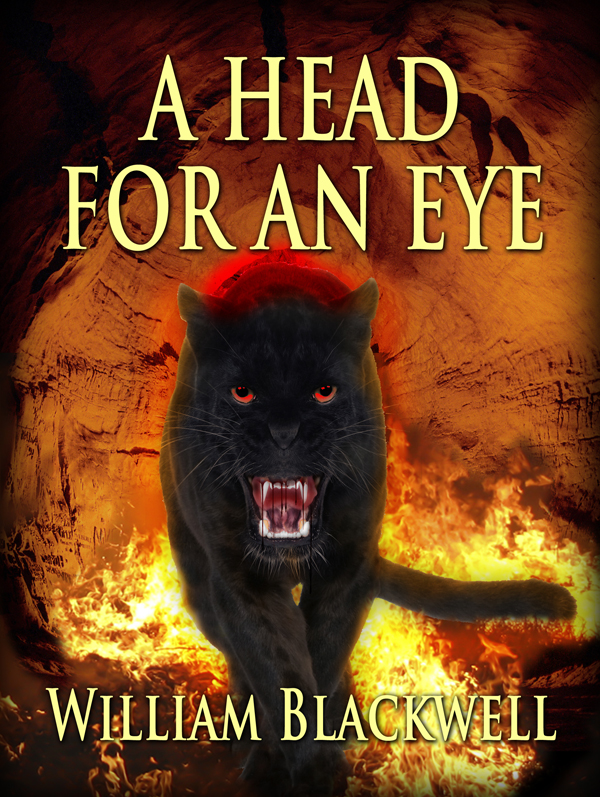
A Head for an Eye: A shocking juxtaposition of the ruthless Tarahumara brand of justice with the questionable North American judicial system. Was $1.99. Now $0.99.

Reviews:

I highly recommend this novel to crime lovers and action lovers, this book was a great change of pace for me and I can’t wait to read more from this author.

Love is tested throughout the story and Matt learns that what is important and worth fighting for might seem a tad crazy at times. An enjoyable read from a great author!

Extraordinary story with well researched details, captivating development of the characters and their relationships and an important underlying message. The reader is quickly drawn into the scary and unpredictable world of drug cartels and follows the path of Matt and Angelique as they find themselves venturing into the thick of it.

Well written story with some unusual contents in it. Highly recommended if you want to read a good horror fiction book with a solid and believable story. Five Star rating.

So please, click the Smashwords link below and buy, buy, buy! There are plenty more deals to be had. Thanks for your time and have a great day.

https://www.smashwords.com/profile/view/WilliamBlackwell1


Soar to new heights in the 8th dimension

For most of us, we live in a four-dimensional world. Length plus height plus depth equals three dimensions. Add to that the concept of time and you get the four dimensions of our reality. Some might argue that time is an illusion, or a construct of humankind, and we live in a three-dimensional world. However, in my opinion, time is very real. We can watch the sun set, grass grow, paint dry and our skin slowly wrinkle and age.

According to string theory and quantum physics, there are ten dimensions—other worlds, parallel universes, offering amazing and infinite possibilities.

Writer Philip Perry (bigthink.com) says in the fifth and sixth dimension many possibilities open up. “You’d be able to move forward or backward in time, just as you can in space, say while walking down a corridor. You’d also be able to see the similarities and differences between the world we inhabit and other possible ones. In the sixth dimension, you’d move along not a line but a plane of possibilities and be able to compare and contrast them. In the fifth and sixth dimensions, no matter where in space you inhabit, you’d witness every possible permutation of what can occur past, present, and future.”

If you think that’s strange, think again. Things get weirder in the sixth, seventh, eighth, ninth and tenth dimensions.

Perry says, “In the seventh, eighth, and ninth dimensions, the possibility of other universes open up, ones where the very physical forces of nature change, places where gravity operates differently and the speed of light is different. Just as in the fifth and sixth dimensions, where all possible permutations in the universe are evident before you, in the seventh dimension every possibility for these other universes, operating under these new laws, becomes clear. In the eighth dimension, we reach the plane of all possible histories and futures for each universe, branching out into infinity. In the ninth dimension, all universal laws of physics and the conditions in each universe become apparent. Finally, in the tenth dimension, we reach the point where everything becomes possible and imaginable.”

Physicists believe that mathematically string theory adds up. Perry says, “Aspects about it suggest not one but several different dimensions, ones we’re not generally privy to, though we may be interacting with some of them all the time, completely unaware.”

Of course, the problem with string theory, which most physicists would likely agree, is that it’s hard to test. So people everywhere are putting together evidence to suggest alternate realities exist. There are those who claim they get healing energy from the eighth dimension and magically pass it on to their patients. Others say you can meditate your way into the eighth dimension. Some priests claim you can ascend to another spiritual dimension through a belief in God. And there are those who document strange stories that often defy explanation without entertaining the notion of other dimensions, alternate realities, or parallel universes.

Matthew Santoro has a YouTube video called 10 Pieces of Evidence Alternate Realities Exist. Kind of fitting, don’t you think, since we’re talking about ten dimensions. Here are Santoro’s findings:

One. A Slit Experiment in which electrons acted like they were aware of being observed.

Two. Unexplained Artifacts. Ruins and artifacts found dating back to a time when it is said human life was not known to exist. One example is the London Hammer, found in the 1930s, but belonging to a time over five hundred million years ago. Then there’s the first analog computer, made of bronze gears dating back to 100-150 BCE. It’s difficult to explain how these artifacts were found in societies that lacked such advanced technological knowledge, leading many to believe they may have somehow slipped through a parallel universe.

Three. Repeating Universes. Big Bang theory was so powerful it created something called the eternal return, which suggests our universe is bound to repeat itself over and over again. It suggests an infinite number of parallel universes which could contain a world exactly like ours—same people, history and stories, but could differ slightly.

Four. Supernatural Activity. Sightings of ghosts and other supernatural activity. Some believe they may actually be living beings from a parallel universe; that these spectral entities might be a vision through breaches in planes of alternate realities, and timelines that exist almost in unison with ours. Maybe they exist in a realm that we cannot fully perceive with our senses. Spectral humans might actually be flickering in our world from theirs and by that logic we might be flickering into their world, perhaps appearing as a ghost to someone in another reality.

Five. The Fourth Dimension. The existence of the fourth dimension suggests there may be other dimensions. Some people call the fourth dimension a spiritual plane where energy is self-aware and conscious in many ways. Breaching the fourth dimension barrier, according to scientists, would essentially be travelling through time and landing on an alternate earth.

Six. The Hadron Collider. The largest and most powerful particle accelerator built by the European Organization for Nuclear Research. Located in Switzerland, there are many theories about what this powerful machine is being used for. Aside from studying microscopic particle collisions, scientists have also been discovering more and more evidence to prove alternate worlds exist. Some studies suggest Earth’s gravity is weak because gravitons in our world could leak through microscopic black holes and spread into universes parallel to our own.

Seven. Dreams. We are not that much closer to understanding how our brains work. As much as we know, there is much we don’t know. No one truly knows what dreams actually are. Some theories suggest they’re the brain’s way of filing memories or shutting down to deal with stress and process information. Some scientists suggest that once in REM sleep it is the closest we will ever get to alternate worlds. The ability to travel through time and space in your dreams may hint to what life in another plane of existence may be like, giving you a glimpse into an alternate world.

Eight. Visitor from Taured. A man arrived on a plane at Tokyo International Airport in 1954 with his wallet, tickets and passport. His passport said he was from a country called Taured. Officials were mystified, saying Taured did not exist. The man became agitated, insisting his papers were real and Taured, a European country, had thousands of years of history. But none of the institutions listed, even the hotel where he’d claimed to have booked a reservation, could vouch for his existence, or his country of origin. On a map, he claimed that where the country of Andorra was, Taured should be. While officials tried to sort it out, they put him up in a hotel under constant guard. A short time later, the man disappeared from his hotel room and his documents, which were kept in airport security, also mysteriously vanished. Apparently there are no official reports of his arrival but you could understand an airport security guard’s reluctance to want to write a report.

Nine. Lerina Garcia Gordo. On July 16, 2008, she woke to find different colored bedsheets on her bed. She shrugged it off and went to work. But, even though she was on the right floor, someone else’s name was on the office door and none of her co-workers looked familiar. It was as if she’d woken up and landed on a different planet. Some claim it was just memory lapse, while others believe her story to be solid proof of a parallel universe.

Ten. Alter Vu and the Mandela Effect. Alter vu, unlike déjà vu, is when someone remembers a completely different past altogether. Having a memory of a blue bike when in reality the very same bike has always been red. The Mandela Effect is when a person recalls a memory that did not actually occur. For example, many people remember the Berenstein Bears, when in reality they were always the Berenstain Bears. No records ever existed or exist of the bears ever being called the Berenstein Bears. Some believe this suggests a life in an alternate universe.

Stephen Hawking is an English theoretical physicist, cosmologist, author and Director of Research at the Centre for Theoretical Cosmology at the University of Cambridge. His scientific work is well-known and world-renowned.

According to Hawking, it appears that other dimensions, rather than being science fiction, “may be science fact. We now have reason to believe that space time may have more than the three dimensions of space and one dimension of time.”

Hawking says, “The answer may be that we live in a brane world… it means a membrane or surface in a larger space. Branes are the brainchild of my colleague, Paul Townsend at Cambridge. The idea is that matter and light would be confined to the brane thus we could not travel through and see the extra dimensions. However, we would feel them because gravity would spread through the extra dimensions from shadow branes that we cannot see. There could be shadow galaxies, shadow stars, and even Shadow People who might wonder about the gravity they feel from matter on our brane. To us, such shadow objects would appear to be dark matter, matter that can’t be seen, but with gravity can be felt.”

So, do other dimensions exist? Sure, much of Santoro’s evidence can be refuted. Even Hawking’s theories may have holes. But there is an overwhelming volume of evidence, scientific and otherwise, that strongly suggests that parallel universes, alternate realities, extra dimensions—whatever label you choose—are much more than mere science fiction. While many of these theories and stories are difficult for the human mind to cognize, at the very least, they should give rise to the possibility of the existence of other worlds with limitless and amazing possibilities. Imagine being able to see into the past, present and future? Imagine being able to travel through other dimensions? Imagine suddenly becoming debt-free?

If you ever experience any of the aforementioned phenomenon, it may change forever how you view reality. Thanks for stopping by and feel free to leave comments below.

Who are the Shadow People?

Just who are the Shadow People anyway? Well, to define the plural, let’s start with the singular—shadow person. According to Wikipedia, a shadow person “is the perception of a patch of shadow as a living, humanoid figure, particularly as interpreted by believers in the paranormal or supernatural as the presence of a spirit of other entity.”

Although some would argue it, Shadow People represent the shadow person, only in droves. According to researchers, images of Shadow People date as far back as 300 AD. Wikipedia says, “A number of religions, legends, and belief systems describe shadowy spiritual beings or supernatural entities such as shades of the underworld, and various shadowy creatures have long been a staple of folklore and ghost stories.”

So what do they want? Well, that is certainly a matter of debate. Here are some theories:

An extraterrestrial theory. Shadow People are negative alien beings, sent to harm or abduct us, who can be repelled by invoking the name of Jesus.

A neurological theory. Shadow People images occur during sleep paralysis, a mysterious sleeping disorder occurring in that transitional stage between waking and falling asleep during which a person becomes completely immobilized and often sees frightening images. In that case they would just be the manifestation of a sleeping disorder and by extension nothing more than a product of the subconscious mind.

A religious theory. Shadow People are the evil minions of the Devil sent to snatch our souls and drag us down into the filthy bowels of hell.

Another religious theory. Shadow People are guardian angels, sent from heaven to protect our souls and shield us from evil.

I could probably go on for hours about the many theories that exist. We know for sure that thousands of people have seen the Shadow People in their waking and sleeping worlds. We know that, due to the supernatural aspect of their existence, nobody has yet to prove what the Shadow People really are. But my favorite theory is this one:

The Scientific theory. Some physicists believe that unexplained forces are causing other dimensions to merge with ours. This merging of different dimensions would explain why we can only see the Shadow People as shadowy figures who have the ability to transcend our laws of gravity, float through walls, fly, and change shapes at random.

According to this theory, Shadow People are the extra-dimensional inhabitants of another universe or another dimension. That’s why they can disappear and reappear in the drop of a hat. Or maybe in the drop of the Hat Man.

Theories also abound on the existence and agenda of the Hat Man. Many people report seeing him in their waking lives. Some claim he’s a guardian angel of sorts while others are convinced he’s the devil come to harvest their souls. He has been connected to alien abduction, preying on fear, and striking you when your defenses are low; when you’re sick or depressed. Some claim he’s trashed their houses and tried to strangle them to death in the middle of the night.

In some reports, The Shadow People and the Hat Man are sometimes interconnected. Some people claim to see the Hat Man with the Shadow People. But the connections are muddy at best.

In Dark Menace, my work-in-progress supernatural thriller, I attempt to clarify the connections between the two strange and mysterious phenomenon that are very real and very terrifying to many people. Here’s a synopsis:

Noah Jansen is plagued by nasty nightmares and multiple sleep disorders; night terrors, sleepwalking, sleep talking, and a terrifying sleep paralysis that often invokes chilling images of the Hat Man and the Shadow People.

Determined not to let his nocturnal demons interfere with his successful career and a crush he has on Angela Rosewood, he meets her for a drink in a local pub. But when he sees a dark shadowy figure wearing a fedora and a trench coat peering at him eerily through a window, he freaks out, fleeing in terror and battening down the hatches of his apartment.

He soon learns that a hat-wearing man has viciously attacked Angela, smashing in her door, trashing her apartment, and nearly killing her. Worse still, Angela believes Noah has morphed into a conduit for evil and starts distancing herself from him. She might even think he is the Hat Man.

Desperate to save his new relationship and find answers, he seeks the aid of former physicist and sleep specialist friend Neil Samuelson, now a full-time paranormal investigator. While remaining tight-lipped on his experiments involving the Shadow People and the Hat Man, the enigmatic scientists informs Noah that an old woman has just been brutally murdered at the hands of The Dark Menace.

As blood-curdling reports of Shadow People and the Hat Man begin to escalate, Noah finds townsfolk pointing fingers at him. They believe he’s plunged off the precipice of sanity. Noah believes the Hat Man is not only real, but actually exists in a dangerous and deadly other dimension—one the Hat Man affectionately calls “the dead zone.”

He’s thrust into a violent and unpredictable battle to prove his innocence and sanity, win back Angela’s affection, and confront The Dark Menace he believes responsible for all the bloodshed and carnage.

The Dark Menace will be available in leading book retailers soon. In the meantime, if you’ve ever encountered Shadow People or the Hat Man, I’d love to hear about it. Please post your comments below.


The Hat Man Returns

My research has taken me into the fascinating world of lucid dreaming and sleep disorders. I’ve delved into nightmares, night terrors, sleep paralysis, sleep talking, sleep walking, even sexsomnia—a condition in which a person actually has sex in their sleep and wakes up with no recollection of it.

I‘ve uncovered some shocking and terrifying stuff.

Take, for example, the case of a Vancouver man who, after passing out at a party, was charged with sexual assault. He was later acquitted after the defense proved that he was a sexsomniac and therefore not responsible for his actions.

Then there’s the infamous case of the Toronto man Kenneth Parks, who was charged with murder after police discovered his mother-in-law bludgeoned and stabbed to death in her home. There was no question Parks had committed the murder. But was he cognizant and therefore responsible for his actions? The defense was able to prove beyond reasonable doubt that Parks was sleep walking at the time. The result. Acquittal. Not guilty, by reason of sleep walking.

These true stories are frightening in their own right. But it was during my research on sleep paralysis that another, perhaps even more disturbing phenomenon, emerged. Sleep paralysis is a condition that occurs during that transitional stage between waking and falling asleep whereby a person becomes completely immobilized. During these episodes, people may hear, feel, or see things that are absolutely terrifying and panic-inducing. They might be awake and aware of their surroundings, but otherwise completely frozen, leaving many to wonder if they’re actually dying, or even traveling out of their bodies. Some have reported soaring through visually stunning colors and passing through a time warp and into another dimension.

During sleep paralysis, some people see the mysterious Hat Man, a darkly cloaked shadow man with a wide-brimmed hat. Widely documented, some believe he is a powerful evil force who actually exists in another dimension.

Seeds of The Dark Menace, the working title for my work in progress, began to grow. “What is this Hat Man?” I asked myself. “Is he a sleep-paralysis induced figment of one’s imagination? Or is he real?”

Theories abound on the existence and agenda of the Hat Man. Many people report seeing him in their waking lives. Some claim he’s a guardian angel of sorts while others are convinced he’s the devil come to harvest their souls. He has been connected to alien abduction, preying on fear, and striking you when your defenses are low and you are down and out. Some claim he’s trashed their houses and tried to strangle them to death in the middle of the night.

According to Heidi Hollis, author of The Hat Man, The True Story of Evil Encounters, the Hat Man is not only real, but he is the devil.

She writes, “Victims worldwide have reported seeing this man peering into their homes, their bedrooms, their baby cribs, their cars and even—their souls.”

Some have been able to defeat him by calling out the name of Jesus, or having their homes blessed, while others simply just beat the crap out of him. Some simply order him out of their homes.

So what is he? A guardian angel, a figment of the imagination, or a powerful evil force?

That’s exactly what Noah Janzen, the troubled lead protagonist in The Dark Menace, my work in progress, intends to find out. Noah is plagued by a terrifying sleep paralysis that often invokes horrific images of the feared Hat Man. To his horror, he learns he also suffers from night terrors, sleep walking, sleep talking and even the dangerous and little-known condition called sexsomnia.

One morning he wakes up in his pickup truck in the middle of a grassy meadow with no idea of how he got there and no memory of the night before. It isn’t long before he learns two sexual assault charges have been filed against him and one of his enemies has been found brutally murdered. As the noose tightens around him, his life begins to unravel. He’s thrust into a battle to prove his innocence, preserve his precarious relationship with his girlfriend, and confront The Dark Menace he believes is responsible for all the carnage—the soul-harvesting, evil Hat Man.

While everyone around him thinks he’s plunged off the precipice of sanity, Noah believes the Hat Man is not only real, but actually exists in a dangerous and deadly other dimension—one the Hat Man affectionately calls “the dead zone.”

The Dark Menace, a fact-based “fun thriller,” will be released soon. I’m excited about its possibilities. Due to the creative process, plot elements are subject to change. Here’s a tantalizing teaser for your reading pleasure:

The muffled scream echoing eerily from the hallway leading to Noah’s bedroom wasn’t enough to stir Barbara Jansen from her couch-potato, channel-surfing position. With one hand, she reached into the glass bowl cradled on her lap and shoveled a mouthful of potato chips into her mouth, unaware of a few chips that spilled down her gray sweatshirt, one lodging in the crotch of her sweat pants, a few others spilling onto the couch. She grabbed the remote, adjusted her bulk, and turned up the volume. The crotch-trapped chip crunched into powder. Oblivious, she flicked the channel quickly six or seven times and finally stopped at Bride of the Monster, a 1955 B-grade cult horror film. She leaned back and grinned, exposing crooked, decaying and nicotine-stained teeth.

“Mooommmmy… heeeeeelp me!”

Have you seen the Hat Man? If so, drop me a line. Good or bad, I’d love to read about your experiences.

Thanks for stopping by. I’ll see you in the tenth dimension. Don’t worry. It’ll be a riot.


Moonshine Madness

I’m fortunate enough to be in the peacefulness of the country on Prince Edward Island. I live in a 130-year-old-home on forty-five acres that includes a beautiful forest, almost 1300 feet of oceanfront, and a spectacular beach. The area is rich in history, ghost, pirate, and moonshine folklore. Needless to say, my surroundings and the abundant legendary tales have inspired many horror novels.

After I moved in about five years ago, it didn’t take me long to discover that my home was home to one of the biggest moonshine manufacturing and distribution facilities on the Island. I found old ornate bottles, copper tubing and other evidence of moonshine stills; even full bottles of the home-made hooch hidden deep in the forest.

Prohibition on PEI, a temporary wartime measure, was enacted from 1918 to 1920, but alcohol was actually illegal here from 1901 to 1948. During Prohibition, John, the now-deceased previous owner of my home, manufactured and sold moonshine—not only throughout PEI, but also transported it to the United States via the waterways.

As I got to know the neighbors, I heard many stories about John. Although everyone knew moonshine was one of his biggest tickets, and word had it he frequently indulged in drink, nobody had a bad word to say about him. “He would give you the shirt off his back,” one local said. “He was one of the kindest men I’ve ever met,” said another. “He endangered his own life pulling my father out of a ditch during a nasty snowstorm.”

Soon I got to know Bob, John’s affable son-in-law, who had married John’s daughter and lived in the old house for a number of years before the young couple could become financially independent. Bob would drop by periodically out of the blue (it’s what they do here), and entertain me with colorful stories of his past. On a hot sunny day we sat on the back porch swilling moonshine. Fascinated by Bob’s stories, I listened with rapt attention.

One day, he said, he was returning home from a moonshine delivery (John was generous enough to incorporate Bob into the family business) and was having trouble staying on the road. Entertaining clients, he had sampled more than his fair share of the fine and potent hooch. Finally, he did manage to find his driveway, but had a little trouble navigating the entry to the double-car detached garage. He crashed the truck through the wall of the garage, partially destroying it.

“I managed to get myself out of the garage, uninjured, and get up to bed,” Bob said. “But I left the damaged truck embedded in the garage.”

And waking the next morning with a hangover fit for a moonshine delivery driver, Bob was sure he would get a well-deserved tongue-lashing from John.

“But do you know, John never mentioned a word to me about it,” he said, between sips. “Not a word. He wasn’t even angry, or at least if he was he never let on.”

Bob’s demeanor grew serious as he relayed another story, one that would send a cold chill up my spine. He and John had made arrangements with another party for a moonshine delivery. They meticulously packed and transported the order to the waterfront, about three-quarters of a mile from the house, where they were to meet the moonshine buyers in a boat. Something went wrong that resulted in the two parties exchanging gunfire.

“It got a little ugly,” Bob said, his creased complexion whitening. “That’s all I can tell you.”

I was silent for a long minute, wondering: People were shooting at one another? That means someone could have gotten killed. If someone was murdered, where were they buried? Who’s buried in the back-forty? My back-forty.

With an unsteady hand, I drained my shot of moonshine and stood up, telling myself repeatedly that discretion is the better part of valor. Did I really want to know? “What a beautiful day,” I said. “Let’s have another drink and talk about your lovely wife, Betty.”

Handing me his empty glass, Bob’s face brightened. “Such a lovely woman,” he said. “God rest her soul.”

Have you ever had sex in your sleep?

Sexsomnia is a sleep disorder or parasomnia in which a person exhibits sexual behavior during sleep that would normally be associated with wakefulness. A little-understood disorder, it often manifests itself in touching, groping, fondling, masturbation and even actual violent and aggressive penetrative sex with an unwilling participant. According to sleep specialists, when a person wakes up after such an episode, they have absolutely no recollection of it. It’s easy to understand how sleep sex could become a destructive and terrifying experience in one’s life.


In these real-life stories of sexsomniacs, the names have been changed to spare reputations, careers and embarrassment. However, the names of the sleep specialists are real.

A few years ago, Bob, a Vancouver man, was charged with sexual assault after having nonconsensual sex with a woman after crashing out at a party. “It’s the most frightful thing that’s ever happened to me,” he says. “I never really understood fear until it did happen to me.”

Bob had a successful business, a great social life, a bright future and a completely normal life prior to the criminal indictment. But, after the charges were brought forth, which dragged through the courts for almost three years, things spiraled rapidly downhill. In weeks his hair turned gray. He became depressed and suicidal. His life was thrown into utter turmoil. It was like “a hurricane of fear and pain and anguish,” Bob says.

In order for Bob to be acquitted of the sexual assault charges, and the crown attorney threw in a mental disorder charge for good measure, the defense had to prove that Bob’s actions were completely beyond the world of consciousness; that he couldn’t remember it; that he was a sexsomniac.

Enter sleep specialist Doctor Colin Shapiro, who interviewed Bob and had him undergo sleep studies in a sleep lab in the months leading up to the trial. Doctor Shapiro, who testified at Bob’s trial, concluded that Bob suffered from sexsomnia, or “a non-REM sleepwalking disorder.” According to Doctor Shapiro, Bob suffered from an inappropriate sleep behavior which happened to take a sexual form. And since he wasn’t conscious at the time, nor had any recollection of the assault, he should not be held responsible. Evidence showed during childhood Bob suffered from sleepwalking and there was a history of sleepwalking in his family. Other triggers included sleep-deprivation and alcohol consumption.


In the victim’s statement to police she said it was as if she’d woken Bob out of a deep sleep.

In a landmark decision, one of the first of its kind in Canada, Bob was acquitted on all charges. Upon hearing the decision, he broke down in tears of joy and sorrow; joy because he’d beaten the charges, sorrow at the realization that he still carried the heavy and intimidating burden of sexsomnia on his shoulders. Although Bob is now rebuilding his life, he realizes his potentially dangerous sleep disorder is something he has to introduce right away if he decides to get into a relationship. With the possible repercussions too terrifying to endure a second time, it’s not something you tell a prospective partner deep into a relationship.

Two years into his marriage, United Kingdom resident Jim was on top of the world. He and spouse Betty were young, in love, and the future looked bright. Then the sexsomnia started, and would sometimes manifest itself in violent and aggressive sex with Betty, who oftentimes became too terrified to try and stop it. Literally, Jim would sometimes rape her in the middle of the night. Initially Jim refused to acknowledge or believe Betty’s terrifying accounts the morning after. By his own admission, he was selfish and refused to acknowledge he could behave in such a violent, unpredictable and unremembered way. But Betty continued to document the episodes in a diary. As the violence escalated Betty, realizing she was in great danger, refused to sleep in the same bed as Jim and contemplated leaving him. Their relationship reached a breaking point. Finally Jim began to believe his wife and the thought terrified him. He believed he was losing his mind and worse still, might become a risk to others—a sexual predator.

With their relationship hanging in the balance, they sought the help of sleep therapist Doctor Irshaad Ebrahim. Doctor Ebrahim recognized the symptoms and sent Jim to a sleep lab. Tests that measured electrical activity in the brain showed abnormal brain activity occurring during Jim’s sleeping hours. The tests showed that a part of his brain was waking up during these episodes. Further investigation by Doctor Ebrahim revealed that Jim would actually stop breathing an abnormal amount of times in his sleep. Finally Jim was diagnosed with sleep apnea, a condition whereby you stop breathing in your sleep. The condition deprives the brain of needed oxygen and in Jim’s case, according to Doctor Ebrahim, created a state of confusion that induced the episodes of sexsomnia. In Jim’s case the sleep apnea was traced to a blockage in his trachea that required surgery. The doctor also prescribed clonazepam, which prevented Jim from entering a deep sleep, necessary for the episodes to occur.

Three weeks later, the treatment seemed to work and Jim says he has a whole new lease on life. “The biggest thing is we’re now on the road to getting our life back… getting the relationship back to how it was.”

But sexsomnia doesn’t always manifest itself into violent and unpredictable behavior. UK resident Nathan says it has added a new and exciting dimension to his sex life, with many of his past girlfriends enjoying what he calls his “midnight mitten invasions” or “sleep-shagging” sessions. Nathan says his sleep sex persona is likable, not violent or aggressive. If his partners aren’t in the mood, he says, they just gently push him away, tell him to go back to sleep, and he obediently complies. Nathan doesn’t view it as a disorder. On the contrary, as long as the behavior doesn’t escalate into nonconsensual sex, Nathan considers it an added bonus to his sex life.


United States resident Elizabeth wouldn’t be in a position to agree. Her sexsomnia has escalated to the point where she masturbates in her sleep every night, sometimes all night long. It often prevents her husband Rick from getting a good night’s sleep, and also creates feelings of inadequacy in him. Elizabeth has been to numerous doctors, tried various medications and “all known treatments.” None of them have been successful and she’s at the point where she believes there is no solution and she’s ready to give up hope. Her condition has caused several fights and much acrimony in her relationship.

“It’s really depressing to see how much it’s affected our marriage,” she says.

I’ve never met Elizabeth and probably never will. I hope someday modern medicine catches up with the disorder and finds a cure for her. Since her case is a few years old, with any luck she’s already been cured.


According to sleep specialists, since sexsomnia is a relatively new phenomenon, it’s impossible to know how many people are afflicted with it. It’s likely that many, from shame, guilt, revulsion, denial or embarrassment, would not be willing to seek medical help. Sexsomnia causes represent the biggest problems for sleep experts, says Doctor Shapiro. He doesn’t believe, as of now, the medical community can clearly define a typical profile for sexsomniacs. But at least certain patterns are emerging, many of them linked to a family history of sleepwalking.

I once believed nothing could be more terrifying than my frequent nightmares. Nothing could be further from the truth.


Ginger Nuts of Horror interviews yours truly

Ginger Nuts of Horror is the United Kingdom’s largest independent website dedicated to the world of horror. It’s loaded with reviews, features, news and interviews, all horror-related. Recently, they decided to interview yours truly, since horror is my main genre, and I do have a UK following. Enjoy.

Q: Could you tell the readers a little bit about yourself?

A: Sure. Encouraged by some friends, I started writing novels about six years ago. Before that I worked for over fifteen years as a real estate agent in Calgary, Alberta, Canada. Prior to that I held many jobs, but my passion has always been writing. I worked as a journalist for a couple of rural Alberta weekly newspapers and was always writing creative blurbs on scraps of paper in my spare time. Much of these story ideas were inspired by my nightmares, which I’ve had for as long as I can remember.

Q: What do you like to do when you’re not writing?

A: I live on 45 acres of oceanfront property in Prince Edward Island, Canada. Weather permitting, I love to enjoy the outdoors and can often be found grooming my numerous sites with my trusty chainsaw, Mister Stihl. I love nature and my backyard is a giant outdoor playground. When I’m not writing, I also enjoy reading, online book promotion (maybe I don’t really enjoy it, but I have to do it), horror movie, documentary and news watching, and socializing with my friends in an attempt to solve all the world’s problems. We usually do, by the way.

Q: Other than the horror genre, what else has been a major influence on your writing?

A: I’m influenced constantly by everyday events, people, places and things. Often while I’m writing a novel, I find ways to incorporate news of the day into my story line and this often adds a dramatic twist to the novel and takes it in an unexpected and exciting direction.

Q: The term horror, especially when applied to fiction always carries such heavy connotations.  What’s your feeling on the term “horror” and what do you think we can do to break past these assumptions?

A:  The horror genre is intended to scare, disgust, or startle readers.  Many horror readers just love to be frightened and it has almost a cult-like following. But horror often crosses into other genres such as thriller, sci-fi, post-apocalyptic fiction, suspense, murder mystery, etc. I would like to see the definition of horror broaden to not only scare the hell out of readers, but also be a medium to entertain, educate and influence. Although my novels contain many macabre and grisly scenes, and I try my damnedest to shock and frighten my readers, I also try to impart a positive message somewhere in a book, a golden nugget of my moral code; something readers may take away that may help them on the pothole-laden path of life. My road to hell is often paved with good intentions.

Q: A lot of good horror movements have arisen as a direct result of the socio/political climate, considering the current state of the world where do you see horror going in the next few years?

A: To say the least, we now live in dangerous and uncertain times. In the next few years, I think you’ll see more horror writers reflecting that in their work. From a horror writer’s standpoint, we now have more real-life material than ever to draw from.

Q: What are the books and films that helped to define you as an author?

A: As corny and overused as it sounds, horror master Stephen King influenced me a lot. I love The Stand, his Bible of post-apocalyptic fiction. Dmitry Glukhovsky, author of post-apocalyptic thriller Metro 2033, inspired my Assaulted Souls series.  I loved Francis Ford Coppola’s Apocalypse Now and, as lame as it sounds, I think all the horror films I watch influence and shape me as a writer to greater or lesser degrees.

Q: What new and upcoming authors do you think we should take notice off?

A: Stephen King’s son, Owen King, is definitely gaining traction, particularly with the recent release of Sleeping Beauties, a father-and-son collaboration.

Q: How would you describe your writing style?

A: Raw, gritty, real, clear and concise. Trained as a journalist, I’m not a fan of overly descriptive, verbose or flowery prose and edit my own words ad nauseam for clarity and brevity. I love Earnest Hemingway’s simple writing style; it communicates to audiences from all walks of life—from elementary school children to scholarly doctorate degree holders.

Q: Are there any reviews of your work, positive or negative that have stayed with you?

A: The first novel I wrote, a strange hybrid of inspirational fiction and horror, is called Brainstorm. After many long months, I finally finished it and was unsure of its future. I sent it to Winslow Eliot, my editor, and said: “If you don’t like it, I’m trashing it and giving up novel writing.” I waited anxiously for a response. Finally, one came.  One of the first things she said was, “Wow! What a truly amazing story of courage and personal transformation. I was deeply moved by this novel.” If it weren’t for her inspiring words, I wouldn’t have written seventeen novels. She confirmed that indeed I do have talent and encouraged me to pursue my calling.

Q: What aspects of writing to do you find the most difficult?

A: Sometimes the editing process is a real grind for me. Before I even send a manuscript to my editor, I do at least three editing passes of my own, in addition to having a beta reader provide feedback. Then after Winslow performs her masterful surgery, there are usually at least two more edits and a final proof-read before it goes to press. By the time I’m done with it, I’m more than ready to move onto the next project.

Q: Is there one subject you would never write about as an author?

A: I’ve read excerpts from non-fiction books about women who’ve been abducted, held captive, tortured, and sexually abused. While I have written about abduction and torture in a fictional context, I could never write a novel on this topic based on a true story. I would be too afraid if would further scar victims of such heinous crimes.

Q: How important are names to you in your books? Do you choose the names based on liking the way they sound or the meaning?

A: I love symbolism and sub-text. I pick names very carefully based on sound and symbolism.

Q: Writing is not a static process. How have you developed as a writer over the years?

A: I’ve become far more disciplined. I aim for 2000 words a day and don’t leave the office until I’ve accomplished that. I used to write a lot at night but I found that when I went to bed, I couldn’t turn my brain off and would be getting up every few minutes and writing down new ideas. Often I’d find myself at the keyboards churning out words deep into the night. Sleepless night is not a way to maintain a steady and productive writing schedule. Now, while drinking gallons of coffee, my fuel, I write first-thing in the morning and don’t shower, eat, or talk (unless it’s to myself or one of my novel characters) until I’ve reached my daily writing quota. I also make sure all social media and the phone is shut off during this creative time.

Q: What tools do you feel are must-haves for writers?

A: William Shrunk and E.B White’s The Elements of Style. Also Stephen King’s On Writing; an AP Style Guide; a good dictionary and a good thesaurus.

Q: What is the best piece of advice you ever received with regards to your writing?

A: I believe great writers are born talented. However, bad writers, with practice, can become good writers. A writer friend once told me, “Writing is not rocket science. If you want to become a good writer, read a lot and write a lot.”

Q: Getting your worked noticed is one of the hardest things for a writer to achieve, how have you tried to approach this subject?

A: I’m one of the worst examples in terms of self-promotion. I’d rather start a new novel than try and sell one of my existing ones. But this year, out of necessity, I’ve actually developed a marketing plan. I’m slowly developing an email list of my fans. I blog regularly, have a fixed time for posting and interacting on social media, and am constantly searching for that evasive book-promotion secret that will set me apart from that sea of mediocrity.

Q: To many writers, the characters they write become like children, who is your favorite child to write for and why?

A: In my new horror release Freaky Franky, Franklin Reiger is one of my favorite characters. What make a horror novel interesting is when characters are not black and white. Shades of gray make characters interesting and help readers identify with them. Freaky Franky is more than an evil character. As a child, he witnesses the deaths of many close family members, and eventually believes he’s cursed. Everyone around him dies and perhaps reluctantly he decides to give a few of them a little nudge. But, guild-ridden and regretful, he embarks down a landmine-laced path for redemption and rebirth.

Q: What piece of your own work are you most proud of?

A: A Head for an Eye, The End Is Nigh, and Freaky Franky are among my favorites. Maybe they’re biased, but my editor calls Freaky Franky one of my best works and my publisher says it is my best work.

Q: And are there any that you would like to forget about?

A: Inspired by true events, Brainstorm chronicles the lives of an epileptic man and his mentally challenged wife who have so little but give so much. Although my editor’s glowing praise of Brainstorm brought me to where I am today, when I read it I can certainly see how much my writing has evolved and improved over the years. If I decide to rewrite any of my back-list, Brainstorm is first on the chopping block.

Q: For those who haven’t read any of your books, which of your books do you think best represents your work and why?

A: It’s a tough question as I have many favorites. But, since I’m under duress, I’ll take Freaky Franky. If I believe my writing improves with every novel (which, I do), then Freaky Franky represents the most recent culmination of that evolution.

Q: Do you have a favorite line or passage from your work, and would you like to share it with us?

A: I have many favorite passages. This excerpt is from The End Is Nigh, a recently released post-apocalyptic thriller about an unlikely group of people who retreat to an underground shelter as a blazing inferno decimates the world.

“It wasn’t just the flames that made Ralph see red as the trailing SUV skidded to a stop about thirty feet from the inferno. Nor was it the dark red blood dribbling down his face from Steel’s sucker punch and Crass’s boot to the nose. No. It was something else. The agitation had started with Penny’s betrayal of the whereabouts of his friends—slowly unleashing the uncontrollable fury of the intermittent-explosive-disorder monster lurking inside him. Then it was the rejection demon intertwined with the green-eyed monster of jealousy that had begun to unravel the ties that bound him to a semblance of sanity. Frankenstein’s monster had begun to unravel. He first noticed it during the interrogation, but had dismissed it as tricks of his imagination. A look Penny had exchanged with Steel. A look of affection. Nothing. My mind playing tricks on me. But on the way to Sandra’s house, he had seen it again. Not once, but twice. And, to rub salt in the wound, he had also watched her exchange a weird look of affection with Crass.”

Q: Can you tell us what you are working on next?

A: I’ve become fascinated with the mysterious landscape of dreams. Lately, I’ve been doing a lot of research and writing blog posts on nightmares, lucid dreaming, night terrors, sleep paralysis and other sleep-related phenomena. I can feel a great story idea gelling that involves many aspects of dreams. The idea has a ghastly shape, but has yet to solidify into a discussable form. When the mold has form, I’ll give you more.

Q: If you could erase one horror cliché what would be your choice?

A: The evil cat. Why don’t they make the cat the good guy for a change?

Q: What was the last great book you read, and what was the last book that disappointed you?

A: Harper Lee’s To Kill A Mockingbird is well-written and contains great character sketches. Also some very meaningful social commentary. Found Dean Koontz’s Shattered somewhat lame in terms of action and character development, although it is well written.

Q: What’s the one question you wish you would get asked but never do?  And what would be the answer?

A: People ask questions such as: “Are you making any real money? How’s it going with your new book? Do you ever think you can really rise out of that ocean of obscurity?” And, although I’m not one to arbitrarily begin discussing writing without being prompted, I sometimes wish they’d ask me why I write. I write for many reasons: to feed my writing addiction (there are worse things to be addicted to), to please myself, and to educate, influence, entertain, and scare the hell out of my readers.

To learn more about Ginger Nuts of Horror visit their website:

http://gingernutsofhorror.com/interviews/five-minutes-with-william-blackwell

The Positives of Santa Muerte Worship

In recent years, the popularity of the worship of Santa Muerte has exploded across the globe like a raging wildfire. As much as police, local authorities, the Catholic Church and news media organizations, have tried to dampen the flames with one-sided interpretations, there are people around the globe taking comfort and joy in worshiping the supernatural folk saint. The statues used in her worship depict a tunic-draped skeleton, often holding a scythe and a globe, a sort of female Grim Reaper.

“From Chile to Canada, Santa Muerte has no rival in terms of the rapidity and scope of its expansion,” said Andrew Chesnut, a professor of religious studies and author of Devoted to Death: Santa Muerte, the Skeleton Saint.

If you believe the Catholic Church, worship of Santa Muerte is evil, blasphemous and satanic.

The FBI has compiled many cases where murder victims have been decapitated as sacrificial offerings to the mysterious Skeleton Saint. In some cases the evidence is clear, in others definitely suggestive.

It’s no secret that drug cartels and assassins worship the Skinny Lady, often praying to her using symbolically colored candles for safe passage of drugs, or death to their enemies.

The media often sensationalizes reports of Sante Muerte worship, favoring the news-grabbing, macabre and negative aspects of those convicted or suspected of worshiping with evil intentions.

But to her supporters, the Skinny Lady has the power to heal illness, protect, bring prosperity and abundance, and help them find love and happiness.

According to Enriqueta Romero, one of the people credited with taking Santa Muerte mainstream in Mexico around the turn of the 21st century, worshiping her is anything but doom and gloom. “She shouldn’t be feared. She is not vengeful, she will not hasten your death. She is part of life and she protects those no one else will.”

Often referred to as a high priestess, Romero has a shrine to Santa Muerte at her home in Tepito, Mexico, where people come from around the globe to worship and give offerings to their saint. Often these offerings include tequila, marijuana cigarettes, votive candles, incense, sodas, chocolates, flowers, tacos, pastries, amulets, etc. Often devotees arrive on their knees to visit the Santa Muerte alter.

Considered to be morally neutral and more forgiving than the Catholic Church, Santa Muerte now has an estimated 10 to 15 million followers.

Romero defends her skeleton saint. “Everyone thinks the Santa Muerte is for narcos, (drug traffickers)” she said. “But it can be whatever you want and for whoever wants to have faith in her.”

Worshipers from all walks of life relay their inspirational stories after forming a pact with the saint. One man, a reformed alcoholic who claimed eight months of sobriety, said: “I’ve tried to get sober for a year but she was the only thing that has kept me sober this long.”

A few years ago, Manuel Zavala was assaulted so badly he almost died. Then he discovered the Skeleton Saint. “Honestly, I’ve been very bad. I did things I shouldn’t have, but God gave me a second chance and thanks to God, I discovered Santa Muerte.”

According to Zavala, Saint Death does good deeds for those in need of help. “I go to a church and like the priest says: ‘Life is death and death is life.’”

Zavala credits Santa Muerte for putting him on a morally upright path. “Thanks to a person I love a lot, my White Girl, my life has changed and now I’m not the second-rate guy I was before.”

You don’t have to look too far to see other examples of Santa Muerte’s popularity. There are a number of groups on Facebook. One called Santa Muerte Grupo at last count had 51,888 members and 151,325 likes. Members often post images of Santa Muerte that quickly generate hundreds, if not thousands, of likes and comments, most of them simply “amen.”

One image depicts a skeleton with angel wings holding an hourglass. Its message: “Today I come to you to do that miracle that you need so much. If you believe in me, comment amen.”

In another group called Santa Muerte an image of the Skeleton Saint proclaims: “Santa Muerte of my heart, do not forsake me and give me your protection.” That group, at last count, had 70,010 members.

Life is never black and white. There are always shades of gray It’s obvious the worship of Santa Muerte is not all bad; she has followers from all walks of life—looking for prosperity, protection, healing, happiness and love.

In my latest horror release Freaky Franky, I examine both aspects of Santa Muerte worship—the gruesome and macabre murders committed in her name, as well as the benevolence she bestows upon those who revere her in a positive fashion. Painstakingly researched, Freaky Franky is more than an examination of the horrifying consequences of worshiping Santa Muerte with evil intentions. It offers a message of salvation, redemption and hope for people who are willing to change for the better.

GET IT NOW AT YOUR FAVORITE BOOKSTORE

Sleepwalkers who create art, sleepwalkers who commit murder

In last week’s blog post, I talked about night terrors—episodes of screaming, intense fear and flailing while still asleep—and suggested it might be dangerous to wake someone in this state. They might become violent and aggressive and attack you. A thought occurred to me as I wrote that blog post. People who have episodes of night terrors have also been known to sleepwalk. And some sleepwalkers have been known to kill, or at least they have been acquitted based on a sleepwalking defense. So, if you see a night-terror-suffering sleepwalker about to walk out the door and thereby potentially endanger themselves, do you try and wake them? What if they wake up and attack you? What if they don’t wake up and try and murder you in their sleep? Maybe you’re damned if you do, damned if you don’t.

As bizarre as it sounds, over a handful of cases have been documented where the accused have used the sleepwalking defense in murder cases—some successful, others not so much. Probably one of the most notorious cases is that of Kenneth Parks, which occurred in Toronto on May 24th, 1987. It represents the first time in Canada that the sleepwalking defense has been used successfully as a defense for murder.

According to news reports, while sleepwalking, Parks left the house at night (leaving his garage and house door wide open), drove about 23 kilometers to the home of his in-laws, retrieved a tire iron from their garage, opened the door to their home (with a key they had given him), bludgeoned his mother-in-law many times—before getting a kitchen knife and stabbing her to death. He also choked his father-in-law into unconsciousness, but the father-in-law survived the attack.

Their two teenage daughters were home during the attack. And while Parks confronted the teens grunting like an animal, he left them unharmed.

It’s a matter of debate when, but at some point after the attack Parks woke up.

A short time later, Parks left the house and drove to a nearby police station. Bloodied and wounded—he’d cut all the flexor tendons in his hands while stabbing his mother-in-law six times—he turned himself in and confessed to police.

Parks said, “I just killed someone with my bare hands; oh my God, I just killed someone; I’ve just killed two people; my God, I’ve just killed two people with my hands; my God, I’ve just killed two people. My hands; I just killed two people. I killed them; I just killed two people; I’ve just killed my mother-and father-in-law. I stabbed and beat them to death. It’s all my fault.”

Parks wasn’t exactly a model citizen. He had gambling debts. He’d been fired for embezzlement. He had an upcoming trial in connection with the embezzlement charges. He had a few marital problems. But he was trying to improve himself. He’d confessed his financial problems to his wife. And he’d vowed to tell his in-laws, whom he reportedly had a good relationship with, about his financial problems. Evidence presented at the trial showed Parks was under a lot of physical and emotional stress, depressed and suffering from insomnia. He also suffered from a number of parasomnia disorders including night terrors and sleepwalking. All of these factors and his remorse about the crimes combined to render an acquittal. Not guilty. The Supreme Court of Canada even overturned an appeal and the acquittal stuck. And since Parks wasn’t judged insane, he was not sentenced to a psychiatric hospital and walked away a free man.

There are over half a dozen similar cases, where the sleepwalking defense was also used, albeit not always successful. The sleepwalking defense is tied to automatism, the performance of actions without conscious thought or intention.

In the United States in 1994, Michael Ricksgers said he’d accidently killed his wife while being in a somnambulistic state, claiming he woke up with a gun in his hand with his bleeding wife in bed beside him. His lawyers said his sleepwalking was brought on by a medical condition called sleep apnea. But the prosecutors argued that Ricksgers was distraught and upset that his wife was planning on leaving him. The jury didn’t buy Ricksgers story and, according to the Associated Press, he was sentenced to life in prison without the possibility of parole.

Sleepwalkers have indeed performed some strange, astonishing and complicated things during their episodes. An Australian woman would regularly get out of bed and have sex with strangers, a phenomenon called sexsomnia.

A chef cooked spaghetti bolognese and fish and chips in his sleep. Some sleepwalkers have been reported to eat entire meals in the middle of the night.

While sleepwalking, a friend who visited me one summer left an upper guest bedroom (I was sleeping downstairs, thank God), walked into the adjacent guest bedroom where his brother slept, stared at him eerily for several long minutes, and then left the room and started walking downstairs. At that point, his brother followed him and woke him without incident; although the sleepwalking guest did claim the next morning that he was convinced my house was haunted.

American sleepwalker Alyson Bair told ABC News she had a nightmare that she was in a river and struggling to stay afloat. Drowning. She woke up with the realization that she actually was in a river and was drowning. She eventually made her way to safety.

One of the most bizarre examples is that of Welsh Australian artist Lee Hadwin. At night, while sleeping, he draws beautiful and oftentimes intricate art—with virtually no recollection of his “sleep-drawing.”

At least one therapist who examined Lee recently suspects that Lee’s night time drawings are actually created in a dissociative and unremembered state related to trauma he suffered as a child.

According to his website biography, “With no training, and no inclination in his waking life to be an artist, Lee draws and sketches portraits, figures and landscapes in his sleep. ‘Sleep-drawing’ since the age of four, it wasn’t until he was 14-15 years old that his nocturnal talents as an artist began to emerge. He recalls: That during his early teens the drawings became a lot more intricate and had more depth to them. Lee draws or scribbles on walls, tables, clothes, discarded newspapers—with pens, crayons, paints and coal—anything he can get his hands on. After all these years he is prepared and has his sketch books and materials scattered around his apartment. His work over the years has become more detailed and more profound. Now, with interest from galleries around the world, TV offers, and talks about writing a book, Lee has discovered a global demand for his work.”

Damn, I wish I could write a horror novel in my sleep. It would save me a lot of blood, sweat and tears. Hell, even a chapter or two would suffice.

Many sleep specialists believe sleepwalking and other forms of parasomnia occur during deep non-REM slow wave sleep (SWS). They claim sleepwalking is caused by a physiological event where the brain attempts to exit SWS and wake up. In normal sleep, the brain transitions from stage one or two of non-REM or REM sleep into the wake-up stage but not normally from SWS. When the brain tries to exit SWS into wakefulness, it gets stuck between this sleeping and waking state, causing sleepwalking.

The Canadian Psychiatric Association contends that sleepwalking usually happens in the first one-third of the night; sexual arousal is not present; episodes usually last less than thirty minutes; sometimes violence, injury and self-injury occur, and sleepwalking is more common in children.

The National Sleep Foundation says symptoms of sleepwalking include sleep talking; little or no memory of the episode; difficulty waking a sleepwalker during an episode; inappropriate behavior like urinating in closets; screaming (when sleepwalking is combined with night terrors), and violent attacks on those who try and wake up the sleepwalker.

While nobody is sure why people murder during sleepwalking, it’s reasonable to assume that—using the bizarre and notorious case of Ken Parks as an example—many circumstances must be present such as stress, depression, financial and marital problems, sleep deprivation, etc. Sleep specialists recognize that the case of Ken Parks is unique and many sleepwalkers are not likely to find themselves in his predicament.

Treatment: While some sleep specialists claim sleepwalking is a physiological disorder and medical treatments will help, others say that no one treatment completely eliminates sleepwalking. They suggest preventative measures to reduce its terrifying effects on many who wake up in compromising situations with little or no memory of how they got there. Among the preventative measures are education; scheduled awakening; hypnosis; making your house safe; consistent sleep schedule, healthy diet, limited alcohol and drug use, etc. On and on it goes.

I don’t suffer from sleepwalking. But I’ve devised a preventative measure to implement if I ever encounter my sleepwalking friend in a dark hallway in the middle of the night. I’ll try handing him a blank canvass and a crayon.

If that doesn’t work, I’ll run like hell. Sleep tight, dear readers. Sleep tight.

Page 5 of 10

Powered by WordPress & Theme by Anders Norén