
Dark Fiction Author

Author: william Page 6 of 9

Sleepwalkers who create art, sleepwalkers who commit murder

In last week’s blog post, I talked about night terrors—episodes of screaming, intense fear and flailing while still asleep—and suggested it might be dangerous to wake someone in this state. They might become violent and aggressive and attack you. A thought occurred to me as I wrote that blog post. People who have episodes of night terrors have also been known to sleepwalk. And some sleepwalkers have been known to kill, or at least they have been acquitted based on a sleepwalking defense. So, if you see a night-terror-suffering sleepwalker about to walk out the door and thereby potentially endanger themselves, do you try and wake them? What if they wake up and attack you? What if they don’t wake up and try and murder you in their sleep? Maybe you’re damned if you do, damned if you don’t.

As bizarre as it sounds, over a handful of cases have been documented where the accused have used the sleepwalking defense in murder cases—some successful, others not so much. Probably one of the most notorious cases is that of Kenneth Parks, which occurred in Toronto on May 24th, 1987. It represents the first time in Canada that the sleepwalking defense has been used successfully as a defense for murder.

According to news reports, while sleepwalking, Parks left the house at night (leaving his garage and house door wide open), drove about 23 kilometers to the home of his in-laws, retrieved a tire iron from their garage, opened the door to their home (with a key they had given him), bludgeoned his mother-in-law many times—before getting a kitchen knife and stabbing her to death. He also choked his father-in-law into unconsciousness, but the father-in-law survived the attack.

Their two teenage daughters were home during the attack. And while Parks confronted the teens grunting like an animal, he left them unharmed.

It’s a matter of debate when, but at some point after the attack Parks woke up.

A short time later, Parks left the house and drove to a nearby police station. Bloodied and wounded—he’d cut all the flexor tendons in his hands while stabbing his mother-in-law six times—he turned himself in and confessed to police.

Parks said, “I just killed someone with my bare hands; oh my God, I just killed someone; I’ve just killed two people; my God, I’ve just killed two people with my hands; my God, I’ve just killed two people. My hands; I just killed two people. I killed them; I just killed two people; I’ve just killed my mother-and father-in-law. I stabbed and beat them to death. It’s all my fault.”

Parks wasn’t exactly a model citizen. He had gambling debts. He’d been fired for embezzlement. He had an upcoming trial in connection with the embezzlement charges. He had a few marital problems. But he was trying to improve himself. He’d confessed his financial problems to his wife. And he’d vowed to tell his in-laws, whom he reportedly had a good relationship with, about his financial problems. Evidence presented at the trial showed Parks was under a lot of physical and emotional stress, depressed and suffering from insomnia. He also suffered from a number of parasomnia disorders including night terrors and sleepwalking. All of these factors and his remorse about the crimes combined to render an acquittal. Not guilty. The Supreme Court of Canada even overturned an appeal and the acquittal stuck. And since Parks wasn’t judged insane, he was not sentenced to a psychiatric hospital and walked away a free man.

There are over half a dozen similar cases, where the sleepwalking defense was also used, albeit not always successful. The sleepwalking defense is tied to automatism, the performance of actions without conscious thought or intention.

In the United States in 1994, Michael Ricksgers said he’d accidently killed his wife while being in a somnambulistic state, claiming he woke up with a gun in his hand with his bleeding wife in bed beside him. His lawyers said his sleepwalking was brought on by a medical condition called sleep apnea. But the prosecutors argued that Ricksgers was distraught and upset that his wife was planning on leaving him. The jury didn’t buy Ricksgers story and, according to the Associated Press, he was sentenced to life in prison without the possibility of parole.

Sleepwalkers have indeed performed some strange, astonishing and complicated things during their episodes. An Australian woman would regularly get out of bed and have sex with strangers, a phenomenon called sexsomnia.

A chef cooked spaghetti bolognese and fish and chips in his sleep. Some sleepwalkers have been reported to eat entire meals in the middle of the night.

While sleepwalking, a friend who visited me one summer left an upper guest bedroom (I was sleeping downstairs, thank God), walked into the adjacent guest bedroom where his brother slept, stared at him eerily for several long minutes, and then left the room and started walking downstairs. At that point, his brother followed him and woke him without incident; although the sleepwalking guest did claim the next morning that he was convinced my house was haunted.

American sleepwalker Alyson Bair told ABC News she had a nightmare that she was in a river and struggling to stay afloat. Drowning. She woke up with the realization that she actually was in a river and was drowning. She eventually made her way to safety.

One of the most bizarre examples is that of Welsh Australian artist Lee Hadwin. At night, while sleeping, he draws beautiful and oftentimes intricate art—with virtually no recollection of his “sleep-drawing.”

At least one therapist who examined Lee recently suspects that Lee’s night time drawings are actually created in a dissociative and unremembered state related to trauma he suffered as a child.

According to his website biography, “With no training, and no inclination in his waking life to be an artist, Lee draws and sketches portraits, figures and landscapes in his sleep. ‘Sleep-drawing’ since the age of four, it wasn’t until he was 14-15 years old that his nocturnal talents as an artist began to emerge. He recalls: That during his early teens the drawings became a lot more intricate and had more depth to them. Lee draws or scribbles on walls, tables, clothes, discarded newspapers—with pens, crayons, paints and coal—anything he can get his hands on. After all these years he is prepared and has his sketch books and materials scattered around his apartment. His work over the years has become more detailed and more profound. Now, with interest from galleries around the world, TV offers, and talks about writing a book, Lee has discovered a global demand for his work.”

Damn, I wish I could write a horror novel in my sleep. It would save me a lot of blood, sweat and tears. Hell, even a chapter or two would suffice.

Many sleep specialists believe sleepwalking and other forms of parasomnia occur during deep non-REM slow wave sleep (SWS). They claim sleepwalking is caused by a physiological event where the brain attempts to exit SWS and wake up. In normal sleep, the brain transitions from stage one or two of non-REM or REM sleep into the wake-up stage but not normally from SWS. When the brain tries to exit SWS into wakefulness, it gets stuck between this sleeping and waking state, causing sleepwalking.

The Canadian Psychiatric Association contends that sleepwalking usually happens in the first one-third of the night; sexual arousal is not present; episodes usually last less than thirty minutes; sometimes violence, injury and self-injury occur, and sleepwalking is more common in children.

The National Sleep Foundation says symptoms of sleepwalking include sleep talking; little or no memory of the episode; difficulty waking a sleepwalker during an episode; inappropriate behavior like urinating in closets; screaming (when sleepwalking is combined with night terrors), and violent attacks on those who try and wake up the sleepwalker.

While nobody is sure why people murder during sleepwalking, it’s reasonable to assume that—using the bizarre and notorious case of Ken Parks as an example—many circumstances must be present such as stress, depression, financial and marital problems, sleep deprivation, etc. Sleep specialists recognize that the case of Ken Parks is unique and many sleepwalkers are not likely to find themselves in his predicament.

Treatment: While some sleep specialists claim sleepwalking is a physiological disorder and medical treatments will help, others say that no one treatment completely eliminates sleepwalking. They suggest preventative measures to reduce its terrifying effects on many who wake up in compromising situations with little or no memory of how they got there. Among the preventative measures are education; scheduled awakening; hypnosis; making your house safe; consistent sleep schedule, healthy diet, limited alcohol and drug use, etc. On and on it goes.

I don’t suffer from sleepwalking. But I’ve devised a preventative measure to implement if I ever encounter my sleepwalking friend in a dark hallway in the middle of the night. I’ll try handing him a blank canvass and a crayon.

If that doesn’t work, I’ll run like hell. Sleep tight, dear readers. Sleep tight.

NIGHT TERRORS: Just bad dreams or something more dangerous?

Nathan Leer locked eyes with the black spider on the ceiling. He blinked, hoping it would disappear. But, instead, the spider grew bigger, its large green eyes and deadly retractable fangs beginning to envelop the room.

“No,” he said. “Leave me alone!” To his ears, his voice sounded eerily surreal.

Growing larger, the spider blasted a sinewy web that landed above his head. Another one followed, and another and another and another, wrapping him in a death trap. He knew it wouldn’t be long before the giant spider was upon him, injecting him with its venom, killing him and then tearing him apart limb by limb—an agonizing, torturous death.

He let out a blood-curdling scream and began tearing frantically at the web. With much effort, he freed himself. He bolted upright in bed, darted into the hallway and closed the door, trapping the spider inside his bedroom, narrowly escaping a grisly end. His heart pounded in his chest. His breath came in short gasps. He was sweating profusely. He walked into the bathroom, relieved himself, and began to leave. He bumped his head on the corner of the door and the sharp pain and warm blood dribbling down his nose, into his eyes and mouth brought him back to reality.
He woke up.

He had very little recollection of the night terror, only some vague unease about narrowly escaping some impending danger. But the small cut on his forehead and the blood terrified him. Holding his hand to his head, he sat down on the couch and waited for his breathing to normalize and the fear to dissipate before disinfecting and bandaging the wound. He returned to bed. Just a nightmare, he thought, as he slowly drifted off to sleep.

But, according to experts, Nathan, didn’t have a nightmare at all. Although he is a product of my imagination, his terrifying experience describes night terrors, a phenomena suffered by millions of people around the globe. Experts claim night terrors are completely different from nightmares. Nightmares usually occur while you’re in Rapid Eye Movement (REM) sleep and night terrors generally occur while transitioning from level 3 sleep (Non-Rapid Eye Movement or NREM) into level 4, the REM stage. With nightmares, although you wake up frightened, you often remember them. Many experts believe these bad dreams are merely the brain’s way of organizing and processing information. Or, as I like to believe, taking out the garbage.

According to Doctor Jeff Schmidt, normally when you sleep your brain suppresses your ability to move, Mother Nature’s way of keeping you calm and immobilized. Not so with dread-producing night terrors, which he believes tend to be genetic. Signs and symptoms include intense heavy breathing, profuse sweating, screaming and flailing, even punching. Sometimes your eyes are open and you can even carry on a conversation with an awake person, although your chances of making much sense are rather slim. Sleepwalking or parasomnia is also a form of night terrors, and that’s where it may become dangerous. If you see someone during an episode of night terrors, it might appear as if they’re looking right through you, like they’re possessed by an evil demon. They might be talking, ranting and raving, and then abruptly return to a calm and peaceful sleep.

But, Schmidt and other sleep therapists maintain, unless they’re wandering around in a potentially dangerous situation, although you might be creeped out, don’t try and wake them. Sometimes, when someone experiencing a night terror is awakened, they will attack the person who woke them. That could get ugly. So just ignore them, he says, as night terrors are for the most part transient. Chances are, it will pass and the person will return to a normal sleep.

Schmidt says about 10 to 20 per cent of children have night terrors but usually outgrow them by the time they reach adulthood. But, however rare, night terrors do carry on into adult life. I probably have an episode of night terrors about once or twice a week. I used to chalk them up to nightmares and embrace them as my subconscious mind taking out the garbage. I now know the difference.

During my episodes of night terrors, often the sound of my own voice would wake me up. Many of my house guests have reported hearing me shouting or talking in my sleep; although fortunately I’m not aware of any sleepwalking events. Thank God, thank somebody.

What causes night terrors?

Theories abound: Prescription drug use, stress, lifestyle, sleep deprivation, diet, heredity, even possession by a demon. And of course the psychologists and psychiatrists are constructing theories. Some doctors believe night terrors can be symptomatic of a neurological disease. Night terrors are classified as a mental and behavioral disorder according to the ICD, the International Statistical Classification of Diseases and Related Health Problems, a health care classification system maintained by the World Health Organization.

Wow, heady stuff. If I extrapolate from those so-called findings, I have a mental and/or behavioral disorder (in other words I’m bat-shit crazy), and I may suffer from a neurological disease. And the prey-trapping spider web expands. Maybe I’m a stressed-out, drug-addicted, sleep-deprived, junk food-munching, demon-possessed monster.

That would be a tough pill to swallow, although it would make an amazing horror novel.

But what can I do about it?

Psychotherapy? Counseling? Moderate doses of prescription drugs? Change my diet? Get more sleep? Change my lifestyle? Visit a priest and get exorcised? Rush to the hospital emergency ward for an MRI to see if I have a neurological disease?

Thanks anyway, but I think I’ll pass. As I found a way to come to grips with my sleep paralysis and frequent nightmares, so too have I found a way to come to grips with my episodes of night terrors.

I’m going to revisit my dear old friend, notable psychiatrist and psychoanalyst Carl Jung. He’s dead, God rest his clever soul, so he won’t be shrinking my head. I’ll just take comfort in a term he calls “Shadow Integration.” The Shadow describes the part of the mind which we have denied, disowned, or outright rejected. It’s our dark side. But Jung maintains that while the Shadow operates as a reservoir of human darkness, it’s also a wellspring of all human creativity; not something evil or bad, just a part of ourselves that we’re unwilling to face. Shadow Integration means going to the source of the fear and forming a relationship with your dark side. By doing so, the Shadow becomes a source of warmth and positivity rather than a destructive force.

Since night terrors are a part of that mysterious dream landscape of the subconscious (part of my Shadow or my dark side), I embrace the strange episodes as a source of warmth, comfort and positivity. Call it self-justification, but I spin my own web and it’s threaded with strands of creativity, possibility, and opportunity.

Sleep well, my friends. Sleep well.

NIGHTMARES: Powerful evil forces or mechanism for healing?

I’ve had nightmares for as long as I can remember, some so intense I’d wake up terrified and sweat-soaked, my heart pounding furiously in my chest. The nightmares used to be so bad I would be afraid to go to bed, afraid to watch horror movies, and often slept with my light on and the door open, giving me an escape route should the demons attack. And, if you believe some people’s horrific interpretations of nightmares, they would only reinforce this fear, these defense mechanisms.

Some of this information really requires you to push the envelope in terms of suspending disbelief.  James Odinga recently published a non-fiction novel titled: OVERCOMING SPIRITUAL MARRIAGES: A practical help for people who are sexually assaulted by DEMONS. What? Sexually assaulted by demons?

Hang in there. It gets richer.

According to Odinga, these incubus and succubus demons, who normally attack while a person is sleeping, have even seduced people in their waking lives, murdering their spouses “to continue their practice without much rivalry.”

Odinga’s not alone.

Noel and Phyl Gibson, authors of Evicting Demonic Intruders, write: “A young lady was lying in bed in a caravan when she heard a voice in her ear asking permission to have sex with her. No one was with her at that time. She readily agreed, then felt the weight of a body, was stimulated and came to orgasm without seeing any one. From then onwards, she was subjected to periodic internal stimulation.”

The authors provide other examples of these demon attacks: “A young man who had been deeply into all forms of sexual pervasions and witchcraft, ended owning two massage parlors, he confessed to having had naked female demons masturbate him frequently at night. He said ‘I used to think it was in my mind until I woke up and found they were really there.’”

In his book, Curses, Unforgiveness, Evil spirits and Deliverance, Rodger Miller says: “We have worked with several people who have these problems but didn’t know it was demonic (I am not aware of anything in the bible that specifically named these demons as incubus and succubus). There are vicious spirits, which can molest and torment individuals. Those attacking females are called incubus and those concentrating on males are called succubus. They often come in prominence in connection with witchcraft, spells, love potions and other curses of lust. They can also operate when people consciously and habitually experiment with sexual sin….The attacks are usually concentrated on the individuals while he or she sleeps and he or she may be awakened with fondling hands, caressing hot lips and tongue and other forms of lust-inducing stimulation.”

But, I’m not going to debate whether the aforementioned writers are actually documenting real-life experiences or not. It’s a common belief that nightmares are a terrifying and destructive force in our lives. As a horror fiction writer, I exploit that notion myself, but only for the sake of an entertainingly scary novel. Typically horror fans just love to be scared.

But in my younger years, that was my view of nightmares; powerful, destructive, terrifying, maybe even real. Until I began looking a little deeper. If you look at nightmares in the context of lucid dreaming (being aware you’re dreaming while you’re dreaming), nightmares become a hugely valuable healing mechanism. Let’s say you were in the throes of a terrible nightmare, and suddenly became lucid. That would give you the power to step outside of the horror movie and view it from the outside looking in. This change of perspective from victim to spectator created by lucid dreaming would then allow you to come to grips with the source of the fear, control it, and lessen it considerably. After all, the nightmare is a product of your subconscious mind. It’s a part of you, wanting to be heard.
In one of my nightmares, I was being pursued by a rather nasty-looking killer. Or at least I thought he was a killer. Suddenly I became lucid, realized I was dreaming, and it gave me the courage to confront the attacker, confront my fear. I stopped and turned around to face him. He stopped so close to me his acrid halitosis-breath assaulted my senses. “What the hell do you want?” I asked. “Why are you chasing me?”

He scratched his stubble chin and ran a hand over his pock-marked face. His beady black eyes rolled around in his head. “How the hell should I know? It’s your nightmare.”

Then the attacker vanished, my fear vanished and I woke up with an epiphany of sorts. Nightmares are not to be feared. Nightmares are to be embraced.

According to lucid dream educator Charlie Morley, nightmares are powerful psychological statements. By confronting them in a lucid dream, we learn to face our psychological issues and fears. He says if we face them with lucid awareness they cease to be nightmares and turn out to be amazing possibilities for transformation and “clear-seeing.”

Notable psychiatrist and psychoanalyst Carl Jung takes it a step further, using a term he calls “Shadow Integration.” The Shadow describes the part of the mind which we have denied, disowned, or outright rejected. It’s our dark side. But Jung maintains that while the Shadow operates as a reservoir of human darkness, it’s also a wellspring of all human creativity; not something evil or bad, just a part of ourselves that we are unwilling to face. Shadow Integration means going to the source of the fear and forming a relationship with your dark side. By doing so, the shadow becomes a source of warmth and positivity rather than a destructive force.
During one of his lucid dreaming retreats, lucid dream educator Charlie Morley asked one of the participants how his night went. The man said he’d had a wonderful night, full of nightmares. Initially Morley thought the guy was crazy. But, after he developed a fuller understanding of lucid dreaming in the context of nightmares, he realized the man was right.

So, next time you have a terrible nightmare, try and get lucid in it; form a relationship with your dark side, and come to grips with your fears and phobias.

It might be the greatest gift you can ever give yourself or anyone else.

EVER WAKE UP IN A DREAM?

Have you ever been dreaming and then realized you were in a dream? This psychological phenomenon is known as conscious dreaming or lucid dreaming—a sudden awareness while you’re dreaming that you are dreaming.  And, according to lucid dream teachers, researchers and therapists, it can lead to limitless possibilities. People all over the world have developed a love affair with this magical world, believing it to be a key to happiness, mindfulness, awareness, kindness, love, inner peace, and spiritual enlightenment.

For over a thousand years, Tibetan Buddhists have practiced lucid dreaming as a means to promote spiritual enlightenment. They’ve developed elaborate techniques to master this richly detailed, moving, exhilarating and inspiring world.

Tapping into lucid dreams, while facilitating a better understanding of consciousness, can also be riotously entertaining.

If you’re aware that you’re dreaming, it follows that you can control your dreamscape. Philosopher and physician Thomas Browne, in his Religio Medici, writes: “… yet in one dream I can compose a whole Comedy, behold the action, apprehend the jests and laugh myself awake at the conceits thereof.” If you can control this mysterious world, then the possibilities become endless. You are only limited by your imagination. My dream world is extremely complex and vivid and, even before I realized lucid dreaming had been scientifically proven, I experienced many lucid dreams.

And I had a riot.

During one such dream, I was walking down the street in a surreal landscape straight out of an old spaghetti western movie set. The sun was just setting on a desert-like crimson horizon. At first I wasn’t aware that I was dreaming, even though everything looked incongruous. Suddenly a fang-toothed monster stepped out in front of an old saloon, growled menacingly, and charged me.  With an adrenaline-fueled injection, I dashed behind an old building. I heard the beast coming closer and began to panic. I started looking around for a weapon to defend myself and magically an AK-47 appeared on the ground in front of me. As soon as I picked it up, the monster approached and I fired a staccato-burst of bullets. Riddled with blood-soaked holes, he dropped to the ground like a sack of hammers. Then it occurred to me. Wait a minute. Machine guns don’t magically appear just when you need one. I must be dreaming.
With that new awareness, I continued down the street, believing I had been thrust into a larger-than-life video game in which the object was kill or be killed. Sure enough, monsters of all shapes and sizes began attacking me and I cut them all down effortlessly with my machine gun. Soon all the monsters were dead and I was alone on the street, smoking gun in hand. Satisfied with my efforts, I began to think of other possibilities. Maybe I should spread my wings and fly. But before I could focus to try and achieve this, one of the dead monsters began to stir. It was as if the camera had been reversed. His spilled blood began to flow from the street and back into his veins. His bullet-ridden body magically healed itself. He rose stronger and more determined than ever. So did the others. They regrouped and attacked en masse.

I cut them down as they approached, but there were too many. Soon they were on me, biting, ripping and tearing me to shreds. With raw fear creeping into my veins, I tried to keep my composure, telling myself over and over that I was dreaming. Like the monsters, I would magically heal and launch a counter-offensive, deadlier than before. But the uncertainty was probably too much and I woke up, albeit with vivid memories of the dream and a not-unpleasant feeling of having escaped into another wild, wonderful and powerful world. I quickly documented the dream and it became the inspiration for Resurrection Point, a dark tale exploring the horrifying consequences of experimenting with death and resurrection.

But, many of my lucid dreams have been far less uncertain and overwhelmingly positive. As with many other lucid dream lovers, my favorite thing to do while lucid dreaming is to fly. I’ve accomplished this many times, soaring high in the sky over beautiful land and seascapes, mesmerized by the beauty and spellbound by the incredibly amazing experience.

Experts say if you want to explore this mysterious world often, you have to train your mind. The most important thing to do is keep a dream journal, document your dreams as soon as you wake up. Become familiar with your dream landscape and its recurrent themes, so you might reliably identify them and thereby put yourself into a life-changing lucid dream. They also say look for incongruous dream signs that will alert you that you’re dreaming. One technique to recognize a dream sign is the reality check.  During your conscious world, look at your hand and look away. Then look back at your hand. It should look the same. During a dream, look at your hand and then look away. When you look back at it, if you’re dreaming, ninety-five per cent of the time it won’t look the same. It might be elongated; you might be able to stretch your finger to ten times its normal size. Your hand may resemble a five-fingered water balloon. That’s because the file for pattern recognition of your hand is stored in the left hemisphere of the brain and dreaming is a right-brain phenomenon. Providing you’re dreaming, the hand-examining reality check will serve as a dream sign, alerting you and helping you become lucid.
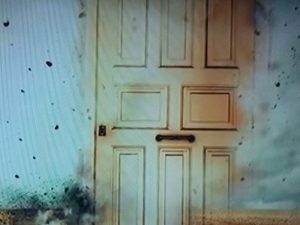
Of course there are many other dream signs; flying pigs; talking to your dead father; being in your childhood home, and being nude in public. It’s just a question of training your mind to recognize them.

Many people claim they don’t dream at all. Their sleeping world is black nothingness, an unaware state. According to the experts, this just isn’t true. Experts claim that every human being has between three to seven dreams per night. Most people just don’t remember them. So, it’s not a question of not dreaming, it’s a question of recall. If you want to experience the transformative world of lucid dreaming, you have to train your mind. Start a dream journal, learn how to identify and use dream signs, and do reality checks.

You might be saying, Why bother?

But think about it. In an average life span, we spend a third of our lives sleeping. That’s about thirty years. Why, if you could develop a richer awareness and understanding of yourself and the world around you, would you choose to spend it in total blackness? It’s almost akin to being in solitary confinement for thirty years.

Experts say it’s possible for anyone to learn to dream consciously. Don’t knock on that door to higher consciousness. Leap right through it. Discover a colorful, crisply detailed and beautiful landscape with limitless possibilities—where you can control the characters, narrative and environment.  Based on my own richly rewarding experiences, I’m quite sure you won’t be disappointed. So sleep, dream, create, escape, enjoy and understand more fully what it is to be human in this complicated and stressful world we live in.
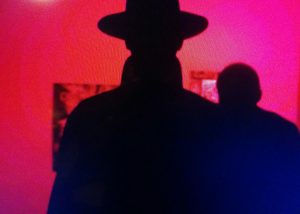
Watch for next week’s blog post on lucid dreaming in the context of nightmares. I’ll discuss the notion that nightmares, far from being a destructive force in our lives, actually represent hugely valuable opportunities to come to grips with our phobias and fears.


SLEEP PARALYSIS: Sleep disorder or something sinister?

Sleep paralysis is a mysterious phenomenon that occurs in that transitional stage between waking and falling asleep during which a person becomes completely immobilized. During these episodes, people may hear, feel, or see things that are absolutely terrifying and panic-inducing. Regardless of their best efforts, they’re momentarily powerless to break free from an almost catatonic state. Since sleep paralysis often occurs on the absolute edges of dreaming, it’s something that’s difficult, if not impossible, to properly define or explain. How can you put rhyme or reason to something that occurs on the fringes of consciousness? Even though our knowledge of dreaming or semi-dreaming only scratches the surface of what might be going on in that complex world, it doesn’t prevent people from trying to understand it. After all, knowledge is power and might lead to a cure.
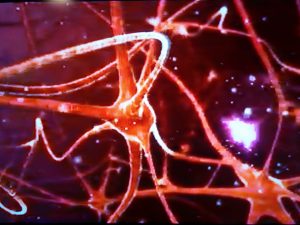
Dream researcher and educator Ryan Hurd writes, “Experienced by millions as supernatural assault, sleep paralysis (SP) often includes realistic, and often frightening, hallucinations that are projected into the waking world.”

Sleep paralysis often suspends the sleeper in a semi-dream state. They might be awake and aware of their surroundings but otherwise completely frozen, leaving some to wonder if they’re actually dying, experiencing an out-of-body experience, suffering a panic attack, a stroke, or even being kidnapped by aliens. Many report seeing frightening black shadow men, some with red eyes and elongated clownish grins. Others are all black, three-dimensional with an authoritarian “hat man” leading the charge. Indeed sleep paralysis sufferers have reported witnessing all manner of frightening ghost-like images; some even claim demon visitations by the succubus and incubus. The succubus is a female demon believed to have sexual intercourse with sleeping men, and the incubus is the male version of that.

During these “hellish experiences” many hear sounds such as door knocking, a thumping sound like an imbalanced washing machine, humming, hissing, static, zapping, buzzing and roaring. People also experience out-of-body sensations, numbness, electric tingles, tickling, and feelings of being dragged out of their beds or flying. Along with hallucinations, some experience pressure on the chest and difficulty breathing. Still others report flying through visually stunning colors and through some sort of a time warp and into another dimension.

And while it scares the hell out of many sufferers, the cause of sleeping paralysis is a matter of debate. The internet is full of videos and online blogs on the subject and it has taken on an almost cult-like following.  Many theories have been thrown at the wall: sleep deprivation, psychological stress, abnormal sleep cycles, diet, lifestyle choices, a dysfunction in REM sleep, even the result of being a victim of a violent and abusive upbringing.
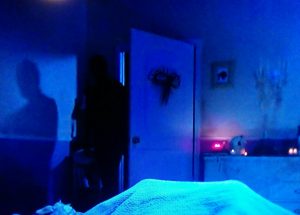
Whatever the cause, I myself have experienced many episodes of sleep paralysis, long before I knew there was even a clinical definition for it or so much information available on the subject.

One night not so long ago, I was deep in an REM sleep. I remember having a series of mini-nightmares; demented people chasing me; monsters attacking me; people yelling and screaming in pain. Just my usual garden-variety night-time mayhem. I think it happened during the last nightmare in the horrifying series. I was in the woods, running away from a demented inbred-looking hillbilly who was chasing me with an axe. Precipitously a realization swept over me that I was in a nightmare. No problem, I thought. I got this. I stopped, curled up on the forest carpet, thinking I could just stay there for a minute or two, open my eyes and will myself awake and back into the comfort of my bed. After all, I’d done it before. But as I lay there trying to get my breathing under control, I heard the attacker’s footfalls growing louder, snapping twigs on the forest floor as he neared. Then suddenly he was directly above me and I could just feel his evil presence and evil intentions like a black tsunami wave.

“I got you now,” he said.

Then he crunched the heel of his boot onto my lower back and I felt a surge of hot red pain course up my spine. I tried to move. I couldn’t. I tried to shout out. I couldn’t. His boot pressed harder into the small of my back. “I bet that hurts. What I’m gonna do next will really mess you up.”

As the fear began to rise, I struggled to free myself. But it was no use. I was frozen to the spot, sleep paralyzed. I tried again to shout out, but it was useless. Not even a raspy whisper. Finally, after multiple strenuous attempts, I woke up. You might be thinking at this point, I was sweat-soaked, heart pounding out of my chest, terrified out of my wits. Yes, admittedly I was a little scared. But not terrified out of my wits. I might have been. If it was the first time. Problem was, it wasn’t the first time and I suspect it won’t be the last. I have been having nightmares for as long as I can remember, many of them accompanied by sleep paralysis. Sometimes my own voice wakes me up. Other times I struggle but eventually free myself from the immobilized state.

Initially my nightmares and sleep paralysis would render me terrified. But, since I seemed unable to escape the sleep paralysis demons, I realized I had to find a way to cope. I read many books on the subject and finally found one that helped me. It was so long ago I don’t remember the source. In essence the theory was that our nightmares (even those that include tormenting sleep paralysis episodes) are actually our subconscious minds processing information, working while we sleep to rid ourselves of the daily stresses of life, solve our problems and indeed cleanse us of negative energy.  According to the theory, the catharsis of sleep paralysis ultimately brings peace. It just has a strange way of doing it.
Maybe it was just a self-fulfilling prophecy, but it helped. Waking from my sleep paralysis and nightmares, I would examine them in the context of a therapeutic healing mechanism, talk myself into feeling cleansed, refreshed and rejuvenated and then go back to bed. After some time, I discovered another coping mechanism. Some of the nightmares, while horrifying in many ways, were indeed extremely lucid and colorful and I would awake and remember clearly many details, including entire verbatim conversations. So, before returning to bed, I would write the details down and file the information away. About six years ago, when I realized my calling as a horror writer, I turned to this file for story ideas. I found dozens and dozens of great ideas. Much of my books are inspired by my nightmares and I believe by writing them down and expanding on them, in some weird way it has freed me from my inner and outer demons. The exercise has not only liberated me from the terrifying nightmares and sleep paralysis but also endeared me to them in an inexplicable way. Now, although some of my nightmares do scare me somewhat, I manage to find the courage to embrace them on some level, if not in their entirety. Writing novels became my way of liberating myself from my demons. Weather we want to admit it or not, I suspect we all have inner and outer demons. To live a happy and productive life, or at least put ourselves on that path, we must find a way to defeat them; or in my case embrace them and simultaneously defeat them. Doesn’t fear give rise to demons and even empower them? Beat down the fear, in whatever way you can, and you’ll be transformed into a healthier mindset. Find whatever justification or crutch you can and hang onto it. As humans, that’s what we do. Explain, rationalize, discuss, understand, categorize and try to cure.

There are many examples of this in Rodney Ascher’s unique hybrid documentary and horror-thriller, The Nightmare. Combining surreal bedtime scenes, a creepy musical score, eerily underlit cinematography, and bone-chilling scare tactics, Asher examines the lives of eight people who’ve suffered from sleep paralysis. Connie Y. is one of them. She speaks of her sleep paralysis episodes—being frozen in utter terror, surrounded by a horrifying, icy cold, dark evil presence. “It feels like what death would be like,” she says. Although she started out abhorring religion, during one particularly terrifying sleep paralysis episode, she called out the name of Jesus to save her. After He answered her prayer (if you want to call it that), she became a devout Christian, married, and wanted little to do with sleep paralysis discussions, maintaining she wasn’t in that space anymore where she felt the need to analyze or address it. Her new-found faith had led to her salvation. She called out the name of Jesus. He came and banished the evil presence from her life.

Another person in The Nightmare claimed that after having a particularly vivid and terrifying experience during sleep paralysis, he stopped being an atheist.

While many sleep paralysis sufferers seek medical help, including psychotherapy, psychiatric treatment, sleeping pills, anti-depressants, and other medications, others outright reject the notion that it is merely a physiological sleep disorder, believing strongly that it is the manifestation of some otherworldly powerful and malevolent evil force. In the end, these beliefs have led them down paths that in some cases have lessened or eliminated the episodes entirely.

I’m not sure anyone can adequately explain the cause of something so mysterious; a phenomenon that occurs during a little-understood transitional state of consciousness called hypnagogia. Wikipedia defines hypnagogia as “the experience of the transitional state between wakefulness and sleep in humans: the hypnagogic state of consciousness, during the onset of sleep. Mental phenomena that occur during this ‘threshold consciousness’ phase include lucid thought, lucid dreaming, hallucinations, and sleep paralysis.”

With all that lucidity, to my mind it’s about as clear as mud. I couldn’t tell you if the condition invokes evil supernatural forces, aliens, or other dimensions. I know my episodes feel very real in a weirdly surreal sense, and at one time were extremely terrifying, even debilitating. But not anymore. I subscribe to the notion that sleep paralysis is my subconscious mind’s way of taking out the garbage.  And since I adopted that theory, just as Connie turned to Christianity, my episodes are far less frightening and far less frequent than before. Now I feel much less fearful about going to bed at night. Not only have I—in some measure—overcome the fear, but I feel psychologically in a much better place (of course some of my friends might disagree). Now, sleep paralysis serves as a gateway to creativity and inspires multiple story ideas. And, thanks to those dirty little demons, I’ve found my passion and calling in life. Hmm…I think I have a new idea for another new horror novel.

Millions of people suffer from sleep paralysis. Do you? Please share your story with me. I hope it has a happy ending.

Sweet dreams.

BOXING WEEK BOOK BLOW-OUT STARTS NOW!!!

Tell your friends, tell your family, tell your neighbors; hell, even tell your enemies. Starting today, Boxing Day, fifteen gripping William Blackwell ebooks will be slashed to 25 per cent off the retail price. The sale ends after 11:59pm Pacific time on January 1st. Are you eagerly waiting to fill up that new Kindle ereader you got for Xmas with some great new books? Maybe you just love the hassle-free distribution and instant access to ebooks? Now’s the time; get them at tremendous savings.

If you’re not a fan of horror, psychological thriller, inspirational fiction, or post-apocalyptic thrillers (my main genres), worry not. Hundreds, if not thousands, of other authors will be participating in the Smashwords sale and also offering novels in other genres at rock bottom prices. And yes, even FREE.

Here is just  a sampling of what I’ll be offering.

Freaky Franky, my new release, revolving around the cult worship of Santa Muerte or Saint Death, will be reduced from $4.99 USD to $3.74 USD. Summary: When a disaffected group of people begin experimenting with the cult of Saint Death, brutal murders begin happening.

Of Freaky Franky, one reviewer says, “Tension is maintained at a high level throughout the novel and threads are expertly woven between the characters to pull them all together in the end. I highly recommend this book if you enjoy suspense, a fair bit of graphic violence and generally being scared to death!”

A Head For An Eye, admittedly one of my favorites, will get slashed from $4.99USD to $3.74USD. In macabre detail, A Head For An Eye juxtaposes the ruthless Tarahumara brand of justice with the questionable North American judicial system. This novel took months of painstaking research and has been praised by reviewers. Example: “Extraordinary story with well-researched details, captivating development of the characters and their relationships, and an important underlying message. The reader is quickly drawn into the scary and unpredictable world of drug cartels and follows the path of Matt and Angelique as they find themselves venturing into the thick of it.”

And that’s not even the kicker. Assaulted Souls, a favorite of my publisher, will be offered absolutely FREE, starting now, right through until February 28th, 2018. Summary: A post-apocalyptic thriller, it’s a raw and graphic exploration of a terrifying existence in a wasteland produced by humankind’s stupidity.

Reviewers:

I would recommend this book to people who like fast-paced thrillers and enjoy reading of a world with society ripped out from underneath us.”

“A well-written story with a powerful shock ending. Really makes you think about the stupidity mankind is capable of. This story does not amble. The action is full-throttle from beginning to end. A gifted writer.”
“I like the clarity of the writing style and the authenticity of the dialogue.”

“The reader is drawn in from page one and can easily read this book in one sitting. I certainly found it impossible to put down!”

So, what are you waiting for? Click the link below, download and enjoy Assaulted Souls FREE, then take advantage of the BOXING WEEK BOOK BLOW-OUT!!!

As always, thanks for stopping by. A very Merry Xmas to you and yours. And a productive and Joyous New Year. May you have many more rum and eggnog-filled festivities. Here’s the link to books that will educate, influence, entertain, and scare the hell out of you. Scroll down when you land on the page. I promise it won’t take you long to find Assaulted Souls. Enjoy.

https://www.smashwords.com/profile/view/WilliamBlackwell1


Life Gets In The Way

According to my 2015 production schedule, Black Dawn, my work in progress, should have been published by now. But, here we are in May, 2016, and it still isn’t done. But, thank God, it’s awfully close. life gets in the way two I have finally completed my multiple edits and rewrites and am just about to cut it loose to my editor. Of course after that, there will be at least another three editing passes, not to mention cover design and the actual publishing process. Realistically it is a month to two away from being published. But that’s the nature of the beast. It’s the sometimes lonely, sometimes rewarding nature of being a writer.

The Dawn of Black Dawn

At long last it’s time. Time for another novel. Black Dawn is taking shape. Many months of note-taking, research and writing in the Dominican Republic and on Prince Edward Island have led to its birth. I’m about 45,000 words into a horror novel which should take about 70,000 to complete. I plan on finishing the first draft by mid-August.skull It will probably be June, 2016, before it’s published. Multiple rewrites and edits (that can be bloody painful), cover design and the actual publishing process will take at least that long. And first I have to finish the first draft before any of that can begin.

What’s it about? Here’s a quick summary:  Saul Climer, a down-on-his-luck alcoholic loser, battles external and internal demons while slowly losing his mind. That’s a capsule comment really. Black Dawn is multi-layered. It’s also about dream teleportation, the ability to physically leave your bed while dreaming and wind up in another location in real time. Sound far-fetched? Not according to some.

There’s a Doctor Bruce Goldberg, a clinical hypnotherapist. Written many self-help books, some bestsellers apparently. He’s been on Oprah, Regis & Kelly, CBS News, even CNN. Anyway, he claims you can teleport—physically relocate the body from one place to another site without touching it in any way—in a dream state. He differentiates between regular dreams and lucid dreams, claiming, “…Your body physically leaves the bed and travels to another location on a different dimension.”

Enter Andrew Basiago, a practicing lawyer. He plans on running for US president and is on a massive campaign to get the US government to declassify its teleportation and time travel secrets. You can find him at Project Pegasus on Facebook.

Basiago claims teleportation has been used as far back as the late 1960s on behalf of the United States government by DARPA, the Defense Advanced Research Projects Agency. As a child, Basiago says he was involved in a highly classified research project called Project Pegasus. green barnSays he’s teleported many times. Claims to have been teleported to Mars and even gone back in time. Says he’s met George Washington, instructed him to withdraw troops, even witnessed Abraham Lincoln’s Gettysburg address. He wants to have teleporters at all airports. Claims it’s a more efficient, safer and more environmentally friendly way to travel. Even has a book in the works supposedly.

It doesn’t take a rocket scientist to figure out why the government might want to withhold this information from the public, if indeed teleportation is even possible. If we could teleport troops into enemy territory, well, so could they.

Back to the novel. Taking place in multiple locations, made possible by dream teleportation, Black dawn also involves elements of Voodoo; exploring the good, the bad, and the ugly about this largely misunderstood religion. It documents the personality types that are drawn to Voodoo and tries to understand why they might find comfort and solace in its teachings and tenets. And, as a creative construct, it works well because it lends itself to inventiveness and horror; after all, the novel’s genre.

What else does Black Dawn do? It examines the lawlessness of Dominican Republic culture juxtaposed with the ridiculous laws and overregulation in Canada. It tries to uncover the paradox of what it means to be Canadian. It questionsblack dawn two why we as a people are being placed under microscopes and in little boxes, our personal liberties, privacies and freedoms being stripped away in the process. Is it better to take your chances in a lawless and dangerous culture like the DR  and really live? Or exist with a plethora of laws in a first-world country and live like a caged lab rat? Don’t get me wrong. I love our country. I’m a proud Canadian. But isn’t it getting a little bit ridiculous? Go to practically any Canadian beach or public park and read the signs: No smoking, no recreational vehicles, no dogs, no open fires, no barbeques, no flotation devices of any kind, no bicycles, no overnight camping, no alcoholic beverages, no lifeguard on duty. Swim at your own risk. Beach open during these hours and closed during these. Did I miss anything? How about no people allowed, no laughing allowed, and HAVING FUN STRICTLY PROHIBITED! That’s only one example. There are many more. What is the establishment trying to do to us? Keep us off the beach and house-bound? Begs the question, but onward and upward dear readers. I have a work in progress to discuss.

Black Dawn is also a love story. What good novel doesn’t contain an element of romance? To love and be loved is fundamental to humankind’s basic needs.

But perhaps at its core Black Dawn is a tale of human vulnerability. It examines vulnerability in the context of the courage it takes to be able to risk it all in the face of overwhelming odds and adversity. black dawn oneThe courage to risk big on something or somebody when there are not only any guarantees for success, but high chances of failure.

As Mother Teresa says:

To laugh is to risk appearing the fool. To weep is to risk appearing sentimental. To reach out for another is to risk involvement. To expose feelings is to risk exposing our true self. To place your ideas, your dreams, before the crowd is to risk loss. To love is to risk not being loved in return. To live is to risk dying. To hope is to risk despair. To try at all is to risk failure. But risk we must, because the greatest hazard in life is to risk nothing. The man, the woman, who risks nothing, does nothing, has nothing, is nothing.

In the pages of Black Dawn, follow the action-packed trials and tribulations of a down-on-his-luck alcoholic loser struggling with demons and insanity. You might laugh. You might cry. You might be scared shitless. You might stay up all night. You might relate to the human frailty and vulnerability that is a part of all of us.

Thanks for stopping by. Until next time, adios. Enjoy your day!

The Bittersweet Journey Home

I’m winding down a seven-month stay in the Dominican Republic with mixed emotions. On one hand I am looking forward to returning to life on Prince Edward Island with Mister Stihl (yes forging new paths with the trusty chainsaw will never end), enjoying the beauty of the forest and the ocean, seeing my friends, and tightening up my writing schedule (yes, admittedly I’ve become a little lax living my dream on a Caribbean island).

But there is always a flip side, always a little gray area that blurs our subjective perspective of reality. I thought initially it would be an easy thing for me to leave here (black white if you like) and adjust to a completely different life in Canada. I know now that is not true. I have forged some deep friendships and intimate bonds. The upcoming trip to the airport will be an emotional and a difficult one. punta rusia beach Puerta Plata, with its quirks, dangers, and cultural idiosyncrasies, has become my home. At the risk of using a corny and overused cliché, home is where the heart is. And right now my heart is firmly embedded here. Sure, it’s been a difficult cultural adjustment to spend this much time in the DR. Service for the most part isn’t as efficient as in Canada, the island doesn’t offer the same diversity of culinary delights as you would find in Canada, you must always remember to put your toilet paper in a garbage can instead of down the toilet, the power outages are frequent and long lasting, internet connectivity is often spotty and slow, and almost everything seems to move in slow motion. Not too mention the abject poverty and the money agenda of many Dominicans. Or the fact that occasionally foreigners are brutally murdered and robbed.

But where else would I get a police escort home after having one too many drinks (no they weren’t arresting me, they were looking after me), be able to enter a restaurant with a road pop, be able to meet more beautiful women than I can shake a stick at, drink on the beach freely and without fear of police intervention, and create a social life like that of a rock star?

Not at my other home, I can tell you that much.

So with heavy heart I leave this Friday. I will be leaving behind people I love and care about deeply. People who would give me the shirts off their backs and come running to my aid if I ever found myself in a jam.

But, alas, you are probably wondering if this blog post even has a point. Don’t worry, I was wondering the same thing a little while ago. But it does and, bear with me, I’m getting to it. When I started this journey almost seven months ago I told myself maybe I will write a lot when I am gone and maybe I won’t.To justify my lackadaisical attitude I referred to a quote by Henry David Thoreau: ” How vain is it to sit down to write when you have not stood up to live.” But as the months down here wore on and my productivity dropped off (to be sure I have done a hell of a lot of what I like to call research and have made scant inroads into a new novel) I started feeling guilty. Guilty because I often heard myself say, out loud and in my cinematic mind, that writing was my passion and the most important thing in my life.

Well frankly speaking I was wrong and Thoreau was right. I can’t pretend to sit down and write if I have not stood up to live. pei beachI can’t pretend to write about love found and love lost if I have not lived it. I can’t pretend to write about brutal murders or vicious robberies and beatings if I haven’t experienced them (you might be surprised just what I have witnessed in the DR). At least I can’t explain them with any real conviction or passion unless I’ve experienced them, or at the very least, interviewed someone who has.

So, yes, Thoreau was right. But I learned something far more valuable during my stay here. Writing is not the most important thing in my life, although it is my passion and always will be. My friends, family and loved ones will always come before any bit of prose I can scratch together. I think somehow I lost sight of that before I arrived here, writing book after book after book at such a furious pace that even Stephen King would be envious (as if).

Call my rationale a  justification for laziness. Call it a seven-month sabbatical. Call it a research project. Call it anything you want. I call it a journey for connectedness, intimacy and love.

And a successful one at that.

There is something far more important than an occupational passion. It’s called love. And I have enough of it in my life now to inspire another three novels, maybe more. And that’s something all the success or money in the world can’t buy.

Thanks for stopping by. Spread the love.


A writer in the Dominican Republic

It’s been some time, over two months actually, that I’ve written anything at all. I’m not counting emails or Skype messages. And as a writer, that’s not always an easy thing. What’s stopping me, you might ask? Maybe it’s a quote from Henry David Thoreau that’s been sticking in my mind: “How vain is it to sit down to write when you have not stood up to live.” Maybe it’s writer’s block. Maybe I feel, with the fourteen titles I’ve written, I’ve said all that I wanted to say. Maybe the furious pace I kept previously finally burned my bulb and I needed a break from the craft. A long break.

If I sit down and analyze it all, Thoreau’s quote leaps to the forefront. I needed to stand up and live a little, get to know more people and interact with characters of all traits, shapes and sizes. Well, I have to admit, since my arrival here November 23rd, I’ve been doing a lot of living. Actually I think I was trying to compensate for the isolated and sometimes lonely existence on my acreage in Prince Edward Island. There I often would not speak to a soul for days; where here I’m hard-pressed to sit down at a table in a beach bar and in less than fifteen minutes be surrounded by friends and acquaintances. Over copious amounts of booze, the ocean waves slapping the sand not fifty feet in front of me, I can indeed observe human nature first-hand,  sometimes at its highest point and others at its most debauched, lascivious, crazy and corrupt.

Page 6 of 9

Powered by WordPress & Theme by Anders Norén